





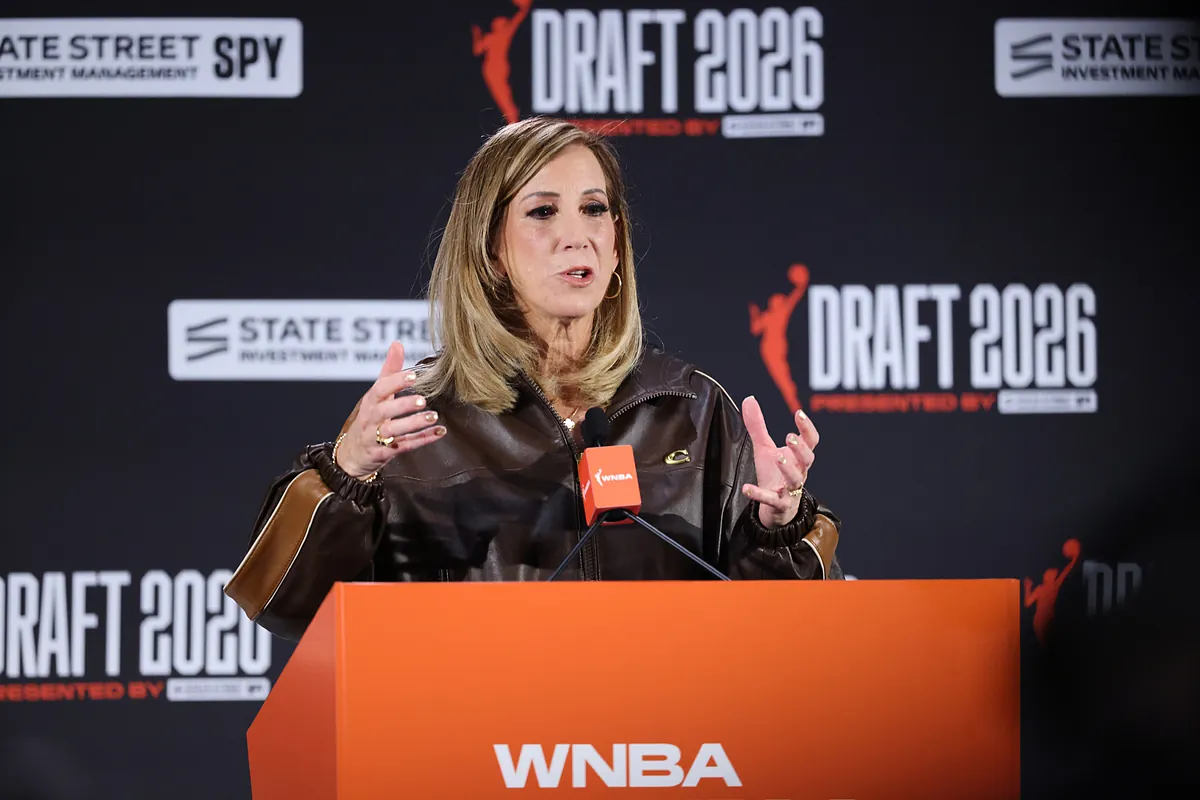
Cathy Engelbert’s recent comments about the WNBA‘s newly agreed collective bargaining agreement have ignited widespread backlash, shifting attention away from what was meant to be a celebratory moment for the league. The WNBA commissioner entered the week expecting to highlight progress, but instead found herself defending remarks that many fans and players interpreted as dismissive of player concerns.
The agreement itself was built around several major negotiating pillars: revenue sharing, player working conditions, and housing support. Athletes pushed strongly for a larger share of league-generated income as the WNBA continues to grow commercially.
They also emphasized improvements to travel, scheduling, and overall workplace standards. Among these issues, housing became one of the most sensitive and symbolic points of discussion.
For decades, the league has provided housing assistance to players, a policy introduced in 1999 to help offset the realities of lower early-career salaries. During negotiations, there was internal discussion about removing that benefit as salaries rise.
That proposal triggered immediate resistance from players, who argued that housing security remains essential regardless of income level, particularly for younger athletes and those with short-term contracts. Ultimately, the benefit remained part of the final agreement after extended negotiations.
Engelbert later addressed the issue publicly, and it was her framing that sparked controversy. She admitted she initially underestimated how important housing support was to players, stating she assumed higher salaries would make it unnecessary.
“I didn’t know how important and emotional that was for them because I just assume, having two children in their 20s, who pay for their own housing, that once they were making these much-increased salaries, that that wasn’t something they would need or want,” Engelbert said.
“But they made it very clear it was very important to them. It was an emotional issue.”
While she emphasized that the league listened and adjusted, critics focused on what they saw as a lack of perspective on player realities.
Engelbert’s comments trigger debate over leadership
The reaction from fans, media, and players was swift. Many argued that describing housing concerns as “emotional” downplayed a very real financial and structural need within the league.
Critics said the wording reinforced a perception that league leadership does not fully understand the experience of professional athletes navigating short careers, variable salaries, and constant relocation.
The controversy also revived broader frustrations that have surfaced throughout CBA discussions. Players such as Satou Sabally and Napheesa Collier have previously voiced dissatisfaction with league proposals, including describing earlier offers as inadequate or disrespectful.
At the same time, some players acknowledge that compromise is part of expansion. As the league grows in visibility, revenue, and schedule demands, trade-offs such as longer seasons or additional games may become more common.
However, many maintain that foundational pieces, like housing assistance, should not be treated as expendable or secondary.
Engelbert has previously stated that player satisfaction is central to the league’s mission and that leadership must improve communication and trust. Yet the response to her latest remarks suggests a gap remains.
What may have been intended as a reflection on negotiation outcomes instead became a flashpoint for criticism about tone and understanding.
While the collective bargaining agreement marks progress in several areas, the controversy surrounding Engelbert‘s comments shows that leadership messaging can be just as impactful as the terms written into the deal itself.
Read the full article here