




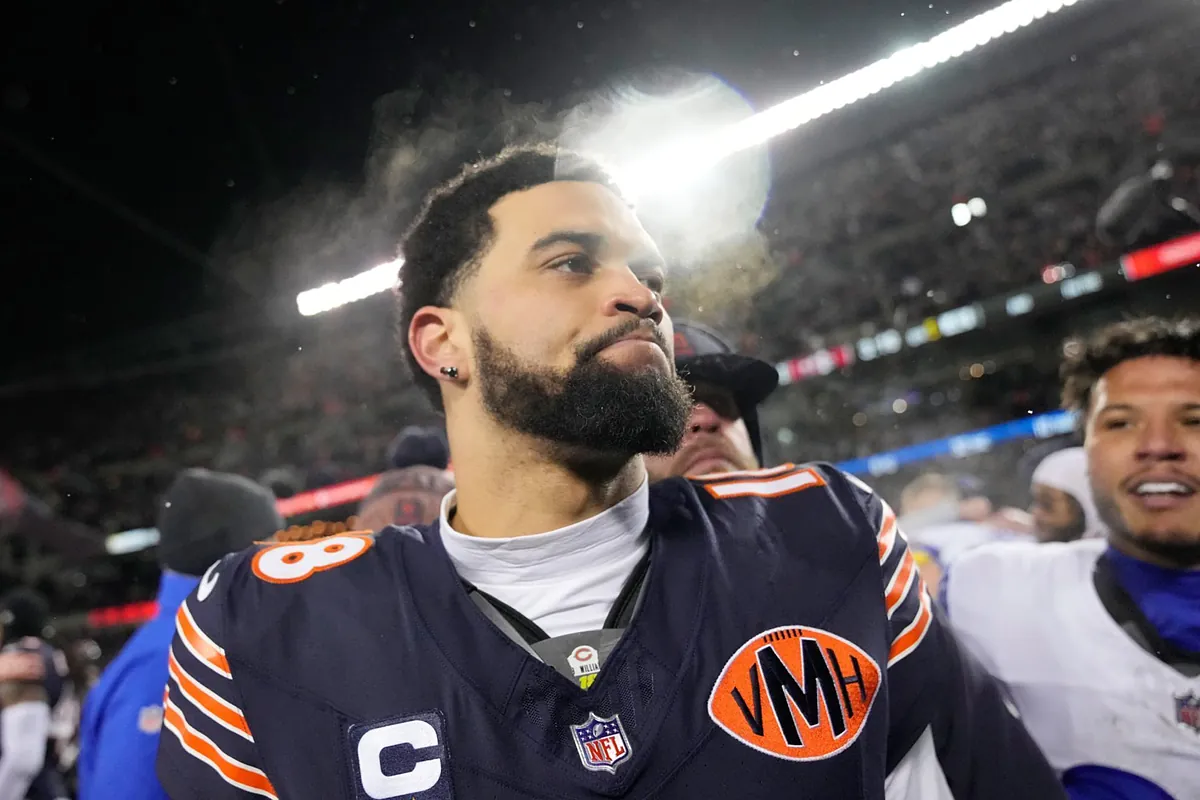
When Caleb Williams was selected first overall in the 2024 NFL Draft, his playmaking captivated and polarized NFL observers.
While many see flashes of elite talent, former NFL scout Daniel Kelly recently reignited conversation around Williams‘ style by claiming the Chicago Bears quarterback plays with what he termed a “superhero complex,” suggesting that his instincts to make dramatic plays might be creating unnecessary drama for the franchise.
Kelly‘s critique raises the question: Should Williams‘ improvisational flair be celebrated as part of his high ceiling, or is it symptomatic of decisionmaking that occasionally puts the Bears‘ offense in difficult positions?
The extalent evaluator didn’t mince words, saying that Williams “wants to do something every play,” a phrase that has fueled discussion among both critics and supporters.
Williams‘ rookie season with Chicago was noteworthy by several measures. He started every game, set multiple franchise rookie passing records, and posted an NFL rookie record streak of 354 passes without an interception. Despite being sacked a franchisehigh 68 times, he still demonstrated resilience that helped the Bears achieve their first playoff appearance since 2010.
His statistical production through two seasons further underscores the complexity of evaluating his growth: Williams has thrown for significant yardage and touchdowns while also showing the dual-threat ability that modern NFL offenses covet.
Still, his style sparks contrasting narratives. Supporters argue that his ability to extend plays and generate big gains, evidenced by his ranking among quarterbacks with high numbers of 25plusyard completions, is a strength that defenses struggle to contain.
Critics, however, point to inconsistencies in accuracy and decisionmaking, especially under pressure. Some fans and analysts have highlighted stretches during which Williams made questionable reads or failed to string consistent performance over the course of full games, particularly when forced to improvise outside structured plays.
Balancing development, instinct, and expectations
It’s important to put this debate in context. Williams‘ college career was storied, winning the Heisman Trophy at USC and earning acclaim as one of the most dynamic quarterback prospects in recent memory. Stepping into the NFL as a firstoverall pick inevitably accelerates expectations, especially for a franchise long searching for stability at the position. In Chicago, that spotlight has only magnified every decision and performance.
Notable figures around the league have weighed in with more tempered views. Former NFL quarterback Carson Palmer argued at one point that Williams needed live reps against NFL defenses to grow into his potential, a stance that frames early struggles as part of natural development rather than evidence of systemic flaws.
Bears insiders and fans often echo this sentiment, acknowledging that Williams‘ rookie campaign involved typical growing pains. Some supporters note that his firstyear performance, achieved amid coaching turnover and offensive line pressure, shows promise rather than peril.
Read the full article here