





Caitlin Clark is no longer approaching her career the same way.
After a physically taxing and injury-disrupted 2025 season, the Indiana Fever superstar is entering the new campaign with a clear plan: protect her body, control her workload, and maximize her impact when it matters most.
Clark’s rise has been meteoric, but the demands that come with being one of the faces of the WNBA have taken a toll.
Between carrying a heavy offensive load and facing relentless defensive pressure, the wear and tear became evident last season. Now, she’s making adjustments, and she’s not shy about it.
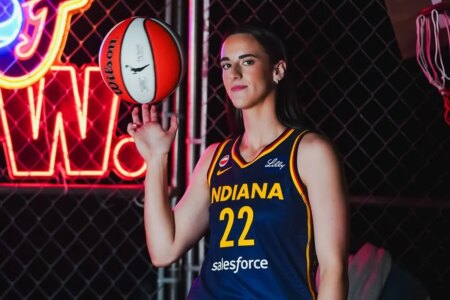
During Fever Media Day, Clark openly discussed her approach to the preseason and beyond, making it clear that she won’t be overextending herself early.
“I’m not going to go out there and play 30 minutes on Saturday; that won’t be the case. I think mostly off the ball and mostly on dead balls. I think I’m the best transition player in the league, that’s where I thrive,” Clark said.
“Everybody knows that’s my game, so getting the ball off a rebound or in transition, that’s why I’m probably going to be the primary ball handler more than anything, and then getting off the ball a little bit and catching your breath.”
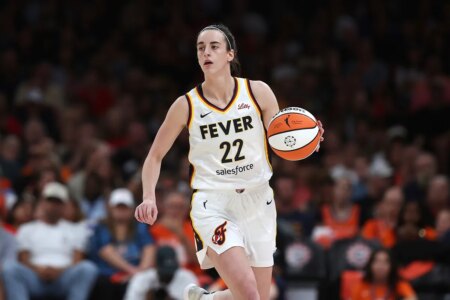
That comment highlights a subtle but important shift. Clark still intends to dictate the pace in transition, where she’s statistically among the league’s best, but she’s also looking to conserve energy by playing more off the ball.
“And I mean, it is exhausting bringing the ball up 94 feet vs. pressure every single time, so we certainly need to find somebody that can handle the ball a little bit. Raven, Kels does it a little bit, even our 4s and 5s, you saw AB do it a lot last year… a lot of different looks that just make us harder to guard,” Clark added.
Fever build around Clark with smarter, balanced approach
The Indiana Fever are fully committed to supporting Clark’s new strategy.
Head coach Stephanie White has emphasized the importance of managing reps, both in games and practice, to avoid repeating last season’s injury struggles.
White believes the roster is equipped to ease Clark’s burden, particularly when it comes to initiating offense.
Guards like Kelsey Mitchell and rookie Raven Johnson, along with versatile forward Aliyah Boston, are expected to take on more playmaking responsibilities.
“[Johnson] can alleviate some pressure with Caitlin having to bring the ball up,” White explained. “It’s having somebody else bring the ball up, initiate offense, and then get Caitlin into action, in the second or third action, or the second or third side.”
This approach doesn’t diminish Clark’s role, it enhances it. By allowing her to operate off the ball more frequently, the Fever can leverage her shooting gravity and movement to stretch defenses while preserving her energy for high-impact moments.
Analysts have also supported the adjustment. Robin Lundberg pointed out that limiting Clark’s workload could be key to both her health and her evolution as a player.
“It’s also about during the season not taking all the reps because that’s how you stay healthy, not exerting your body to that degree,” Lundberg said.
“So, it is helpful for her as I’ve maintained to develop the part of her game off the ball. And for the Fever to have those options.”
He added: “But she’s also correct and caught herself. She was like saying, ‘I’m the best.’ In transition, Caitlin Clark is the most dangerous player in the sport, able to push the pace and find her teammates. And of course, the Fever should construct their roster in that way.”
After missing significant time last season due to multiple injuries, Clark understands that availability is critical.
Her new approach reflects a more mature, calculated version of her game, one focused not just on brilliance, but longevity.
As the 2026 season approaches, Caitlin Clark isn’t just looking to dominate. She’s looking to endure.
Read the full article here