





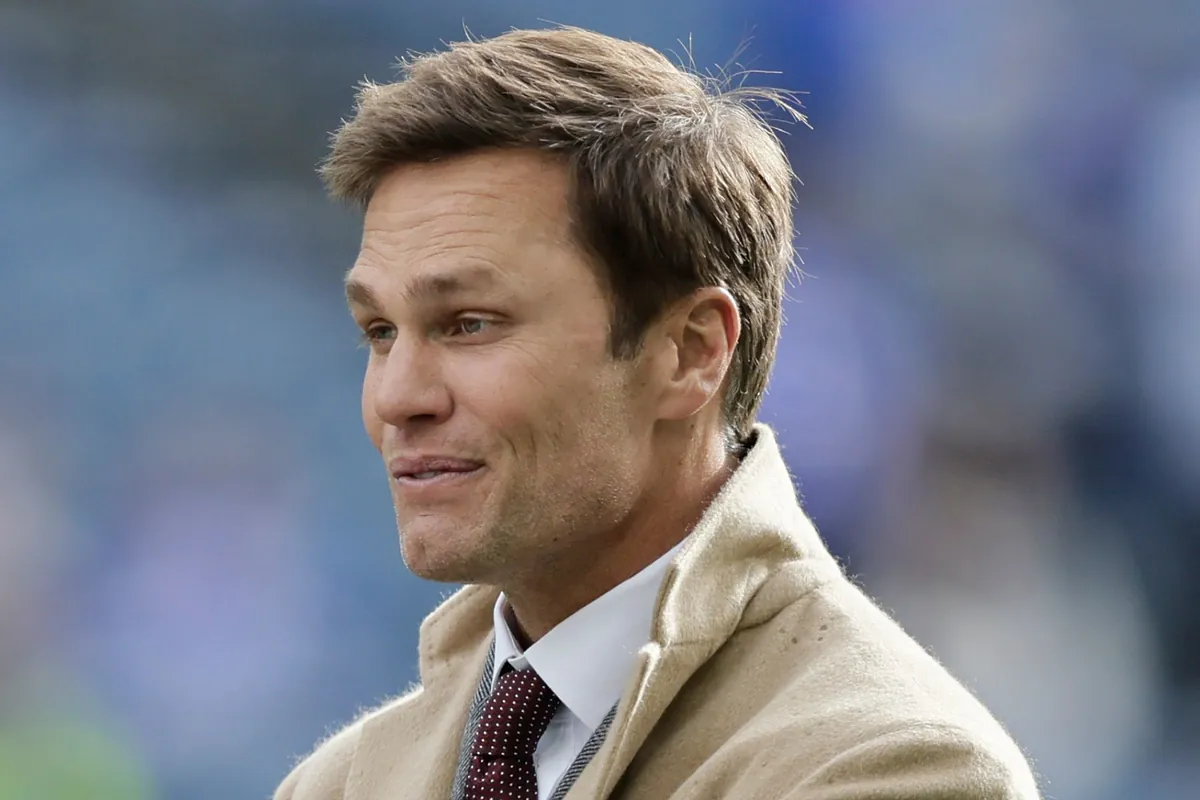
Speculation surrounding Tom Brady and a potential return to the NFL has persisted long after his official retirement, largely due to the quarterback’s history of defying expectations.
Having previously reversed his 2021 retirement decision, the possibility of another comeback continues to capture attention whenever the seven-time Super Bowl champion demonstrates his enduring skill set.
That conversation intensified following a recent appearance at a Fanatics flag football event, where Brady delivered a precise touchdown pass to Stefon Diggs.
The moment served as a reminder that, despite his age, his arm strength and accuracy remain at an elite level. However, what elevated the discussion beyond speculation was Brady’s own admission that he had explored the idea of returning to professional football.
“I actually have inquired, and they don’t like that idea very much,” Brady said in an interview with CNBC while promoting a World Cup-related campaign with Ferrero. He added, “We explored a lot of different things, and I’m very happily retired. Let me just say that, too.”
While the NFL has not categorically ruled out a return, league officials have made clear that any such move would require Brady to navigate substantial structural and regulatory barriers.
League rules present a significant barrier
The most notable obstacle stems from Brady‘s minority ownership stake in the Las Vegas Raiders.
Under league policy implemented in 2023, individuals who hold equity in an NFL franchise are prohibited from simultaneously participating as active players or team personnel. The regulation is designed to prevent conflicts of interest and ensure the integrity of league operations.
An NFL spokesperson indicated that a theoretical pathway does exist, but it would require Brady to relinquish his ownership position entirely.
The spokesperson further noted, “In addition, there would be salary cap issues involving a player/owner,” underscoring the financial complexities that would accompany any attempt to return.
Such a requirement represents a considerable trade-off. Brady’s involvement with the Raiders is not merely symbolic; it reflects a strategic shift toward long-term influence within the sport.
Although he has described his role as largely advisory, “I’m a minority owner. So, when you’re that, there’s really no job description. I don’t have really a daily role,” Brady explained, his presence contributes to the organization’s broader vision and direction.
In addition to ownership considerations, Brady’s existing professional commitments further reduce the likelihood of a comeback.
His broadcasting agreement with Fox, reportedly valued at hundreds of millions of dollars, represents a significant post-playing career investment that would likely need to be paused or terminated if he were to return to the field.
At 48, Brady has already secured an unparalleled legacy, defined by sustained excellence, championship success, and longevity.
A return under the current circumstances would not only demand physical readiness but also require him to forfeit key elements of his post-retirement career.
Ultimately, while the notion of another comeback continues to generate intrigue, the practical realities suggest it remains highly improbable.
The cost, both financially and strategically, appears to outweigh any remaining competitive incentive, reinforcing Brady’s current position that he is, indeed, “very happily retired.”
Read the full article here