





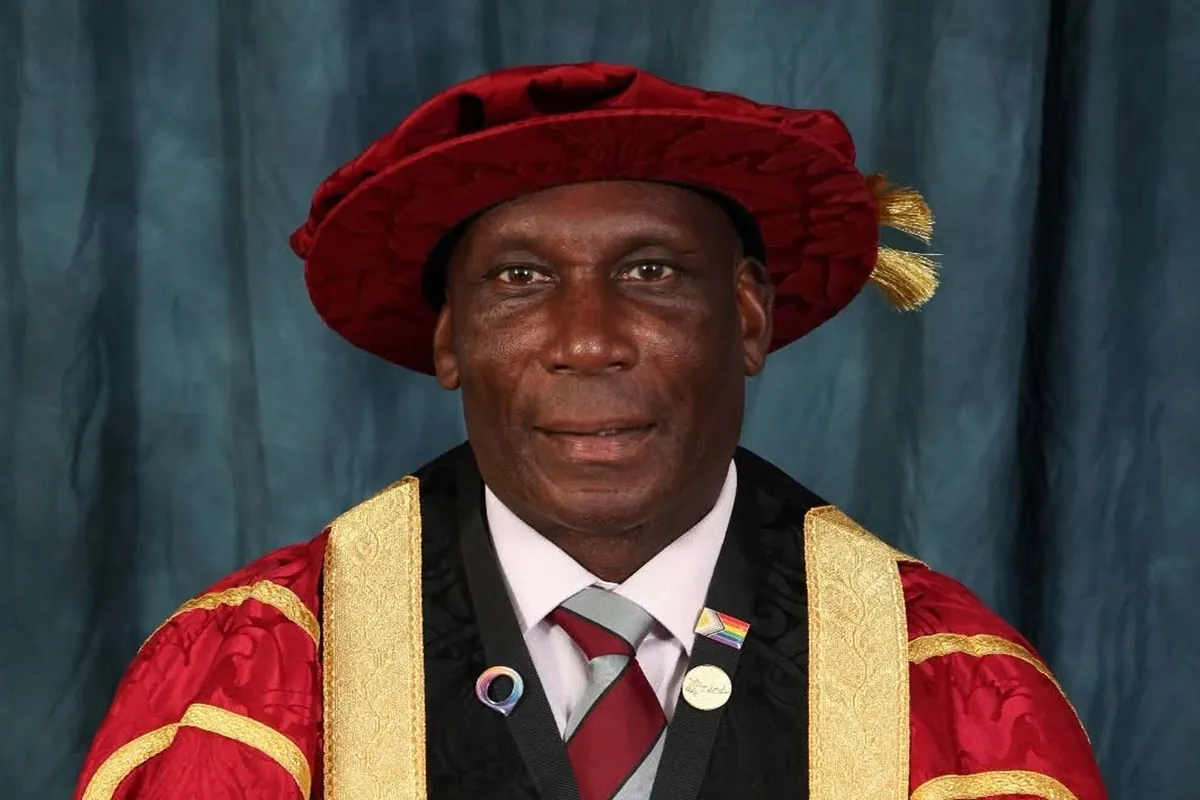
Former Premier League referee Uriah Rennie has left an estate worth £1.28 million to his family following his death at the age of 65, according to recently published documents. The respected official, who passed away last June after being diagnosed with cancer, is remembered not only for his achievements in football but also for his wider contribution to public life in Sheffield and beyond.
His estate was passed directly to his partner Jayne and his two children as he did not leave a will.
Rennie was born in Jamaica and moved to Sheffield at the age of six, growing up in the Wybourn area. From those early beginnings, he built a career that would see him break barriers in English football.
He became the Premier League’s first black referee and went on to officiate more than 300 top-flight matches between 1997 and 2008, earning a reputation for authority and control in high-pressure environments.
His first Premier League appointment came in 1997, when he took charge of the match between Derby County and Wimbledon. Over the following decade, he became a familiar figure in stadiums across the country, known for his calm communication style and ability to manage intense fixtures.
At one point, he was widely regarded as one of the fittest referees in world football, reflecting the high standards he set for himself throughout his career.
Beyond football, Rennie also served as a magistrate in Sheffield, a role he took up in 1996, demonstrating his commitment to fairness and community service off the pitch. He was deeply involved in local sports development initiatives, regularly supporting youth programmes and encouraging participation in grassroots sport across South Yorkshire.
Health struggles, final years and lasting legacy
Rennie‘s later life was marked by significant health challenges. In 2024, he was diagnosed with a rare neurological condition that left him temporarily paralysed from the waist down. The condition required extended hospital treatment, and he spent several months undergoing rehabilitation.
During this period, he spoke openly about relearning basic movement, describing the difficult process of retraining his legs and regaining strength after being confined to bed for long stretches.
“I spent a month laid on my back and another four months sitting in bed,” he told BBC News.
“They kept me in hospital until February, they found a nodule pushing on my spine and it was a rare neurological condition so it’s not something they can operate on.”
Despite these challenges, he continued to remain active in public life. In May, hundreds gathered to celebrate his inauguration as chancellor of Sheffield Hallam University, a role that reflected the high regard in which he was held within education and civic circles.
Although he never fully assumed the position due to his declining health, the appointment was seen as a fitting recognition of his influence beyond sport.
Rennie passed away last June following his cancer diagnosis, and his funeral at Sheffield Cathedral was attended by hundreds of mourners who came to pay their respects. His death prompted tributes from across football and the wider community, highlighting both his pioneering role in the Premier League and his dedication to mentoring and supporting others.
Today, his legacy endures through the lives he touched on and off the pitch.
Read the full article here