




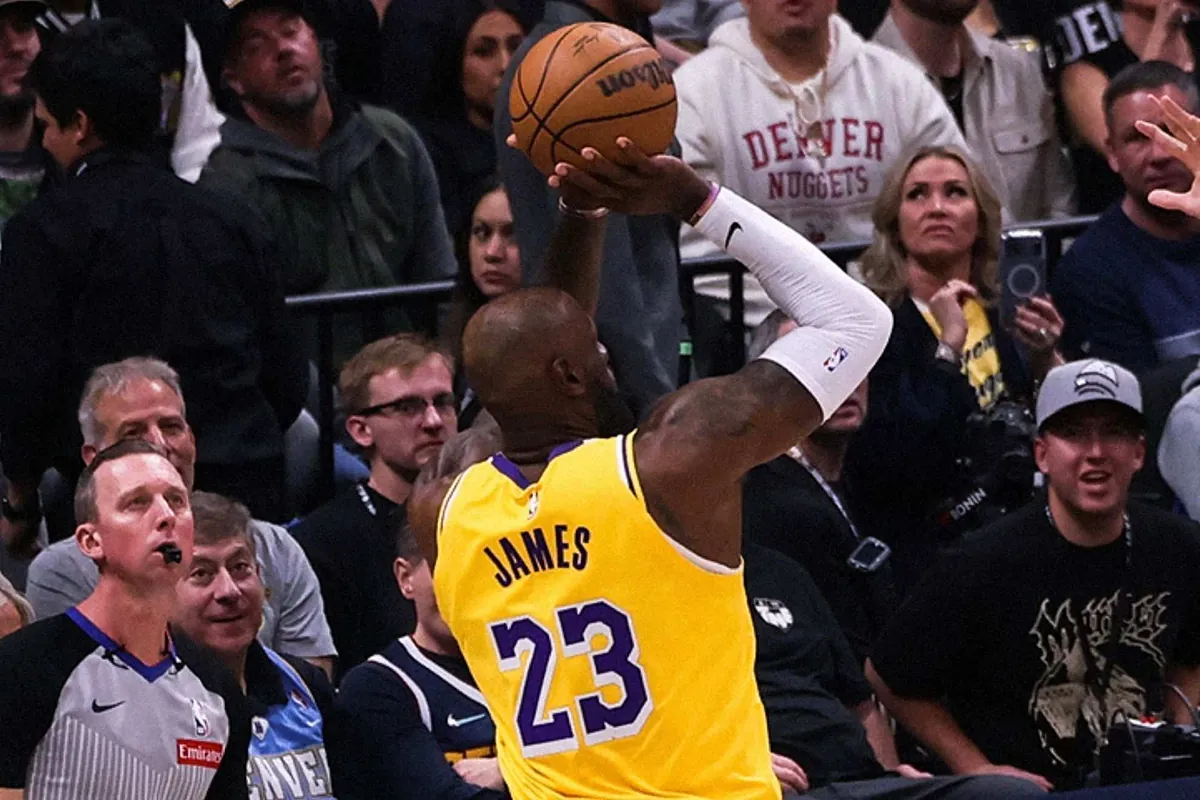
For more than a decade, the debate over basketball’s greatest player has centered on two names: Michael Jordan and LeBron James.
Recently, Jordan himself pushed back on the idea of a single “GOAT,” arguing that basketball greatness is shaped by generations and that the stars of one era build on the accomplishments of those who came before them. His perspective reflects the history of a league where more than 4,800 players have appeared in at least one game across the NBA and the ABA.
Even with that historical context, the list of players who truly stand above the rest is remarkably short. Jordan and James occupy a tier of their own, and even if James never wins another championship, his career already places him above most legends who defined earlier eras of the sport.
A massive leap in 2016
James‘ place in the conversation was solidified long before the later stages of his career. His legacy took a massive leap in 2016 when he led the Cleveland Cavaliers to an NBA title over the Golden State Warriors. The Cavaliers erased a 3-1 series deficit against a team that had just posted the best regular-season record in NBA history. That comeback instantly became one of the defining achievements in modern basketball and pushed James firmly into the GOAT debate.
By the time he captured his fourth championship with the Los Angeles Lakers, the conversation had shifted even further. For many observers, James had already separated himself from most of the other all-time greats who once dominated discussions about basketball history.
Consider the comparison with Tim Duncan, who spent 19 seasons with the San Antonio Spurs, won five championships, and is widely considered the greatest power forward in NBA history. Yet James’ impact across multiple teams, positions, and statistical categories places him in a different class. His versatility as a scorer, passer, and defender created a level of all-around dominance that even Duncan‘s legendary consistency did not quite match.
Above Kareem and Chamberlain
The same argument extends to Kareem Abdul-Jabbar. His six championships and historic scoring record once made him the standard for longevity and production. But James has matched that sustained excellence while playing in a more competitive era and carrying a broader on-court role. As a playmaker, scorer, and defensive presence, James‘ all-around game has often been more complete.
Statistical marvels such as Wilt Chamberlain also loom large in NBA history. Chamberlain produced numbers that still seem unreal decades later. Yet James has been the more consistent winner across his career and has maintained elite performance deep into his 30s while leading multiple franchises to championship contention.
Even dominant champions such as Hakeem Olajuwon and Shaquille O’Neal fall short in the broader comparison. Olajuwon’s footwork, defense, and two championships with the Houston Rockets made him one of the most complete centers ever. O’Neal’s power and presence turned him into perhaps the most physically dominant player the league has seen. However, LeBron‘s blend of scoring, playmaking, defensive versatility, and longevity gives him a wider overall impact on the game.
That reality leaves only one comparison that still divides fans and analysts: Jordan versus James. Michael’s championships, perfect Finals record, and cultural impact remain unmatched. Yet James has narrowed the historical gap while continuing to perform at an elite level deep into his career.
Read the full article here