




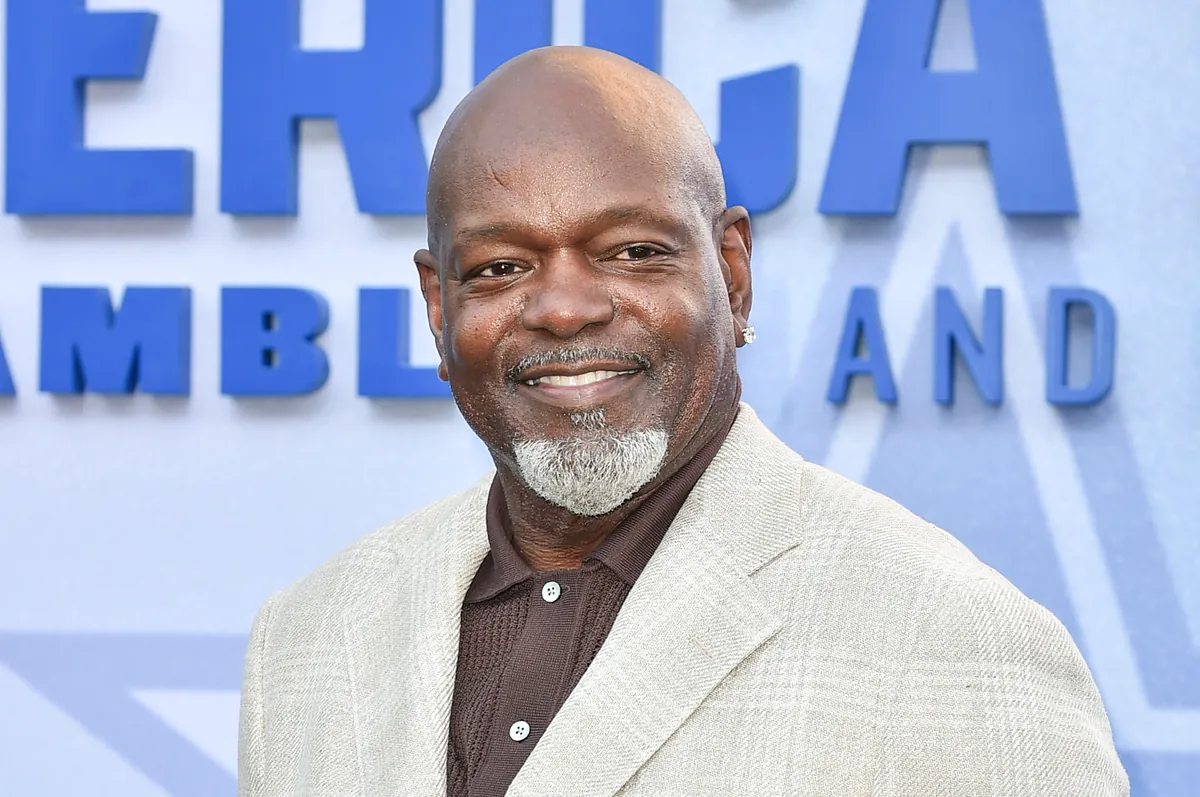
Emmitt Smith‘s career was defined by consistency, durability, and an approach to football that prioritized substance over spectacle.
Selected 17th overall in the 1990 NFL Draft by the Dallas Cowboys, the University of Florida product became the foundation of a franchise that dominated much of the decade.
His impact was measured not only in statistics and championships but also in the example he set with his restrained conduct on the field.
Across 15 seasons, Smith accumulated records that remain unmatched. He retired with 18,355 rushing yards and 164 rushing touchdowns, both league bests.
His 11 consecutive seasons with at least 1,000 rushing yards highlighted a rare ability to sustain production year after year, while his postseason totals, 1,586 rushing yards and 19 touchdowns, remain playoff records.
Smith also contributed as a receiver, with 515 catches for 3,224 yards and 11 additional scores.
The accolades followed naturally. In 1993, he earned both the league’s Most Valuable Player award and the Super Bowl XXVIII MVP after leading Dallas to victory with 132 rushing yards and two touchdowns.
That same season epitomized his value to the Cowboys, who relied on his consistency to anchor an offense that also featured Troy Aikman and Michael Irvin. Together, the trio became known as “The Triplets,” forming the core of three championship teams in 1992, 1993, and 1995.
A legacy of restraint
Despite the milestones and the spotlight of playing for America’s Team, Smith was known for understated reactions to his achievements.
When he scored touchdowns or set records, his typical response was to remove his helmet, hand the football to an official, and return to the sideline. That pattern of behavior was not accidental.
In a recent social media post commemorating his late father, Smith explained the philosophy behind his subdued celebrations. His father had advised him that “the great ones don’t do things like that,” a principle that guided Smith‘s on-field demeanor.
He framed it as a personal choice between chasing greatness or becoming a showman, and he consistently chose the former, even acknowledging that absolute excellence could never fully be attained.
Smith‘s practice of removing his helmet after scoring also had a direct impact on league policy. In 1997, the NFL implemented what became informally known as the “Emmitt Smith Rule.”
Under Player Conduct Rule 12, Section 3, Article 1, removing one’s helmet on the field of play or in the end zone, except for medical or timeout situations, was classified as unsportsmanlike conduct, resulting in a 15-yard penalty.
The measure reflected concerns that such gestures could escalate tensions or be viewed as provocative. While the rule drew attention for limiting celebratory expression, Smith never publicly objected.
Instead, the regulation remains an enduring example of how a player’s actions, even modest ones, can shape league standards.
After 13 seasons in Dallas, Smith spent two years with the Arizona Cardinals before retiring in 2005, formally signing a one-day contract to end his career as a Cowboy.
He was inducted into the Pro Football Hall of Fame in 2010 and remains enshrined in the Cowboys‘ Ring of Honor.
Emmitt Smith’s greatness is remembered through his records and championships, but equally through his discipline. By choosing restraint over theatrics, he not only influenced the identity of the Cowboys but also left a rule in the NFL rulebook that continues to carry his name.
Read the full article here