





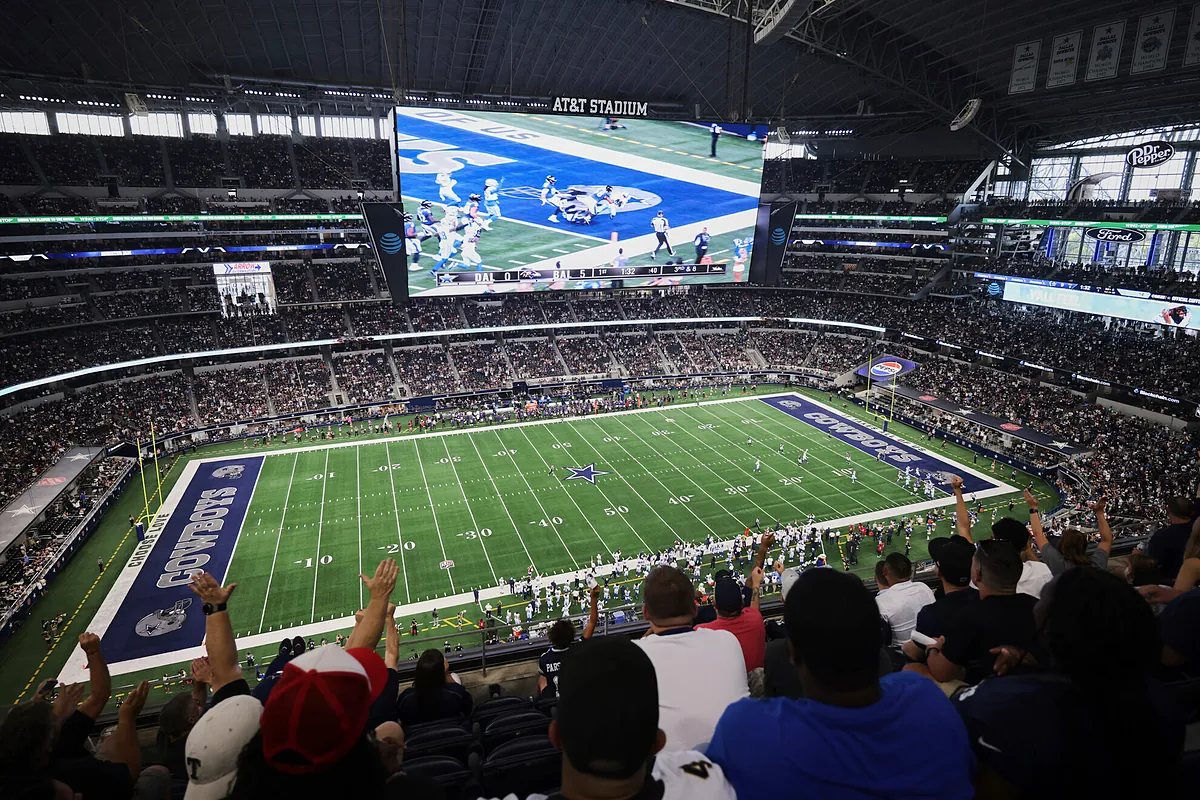
When the FIFA World Cup 2026 arrives in North America this summer, one of the most iconic sports venues in the United States will temporarily shed its familiar identity.
AT&T Stadium, the massive home of the NFL’s Dallas Cowboys, is set to host nine matches, including a semifinal, but it will do so under a temporary name: “Dallas Stadium.” This rebranding is part of FIFA’s strict sponsorship rules, which prohibit any stadium naming rights from non-official sponsors during the tournament.
Built in 2009 and frequently nicknamed Jerry World or The Palace in Dallas, the Arlington, Texas facility has been a symbol of Cowboys pride for over a decade.
Originally called Cowboys Stadium, it received its current AT&T branding in 2013 when Cowboys owner Jerry Jones sold the naming rights to the telecommunications giant. The deal brings Jones an estimated $17-$19 million annually, a significant revenue source for the franchise.
Temporary identity for a global audience
Despite Jones‘ control over the venue, FIFA’s rules override even the most influential stadium owner. From June 11 through July 19, 2026, all references to AT&T will disappear: logos inside and outside the stadium will be covered, and signage, advertisements, and broadcasts will display only “Dallas Stadium.”
This ensures that only FIFA’s official sponsors are visible to billions of viewers worldwide. It’s a practice common to nearly every World Cup venue, prioritizing commercial uniformity over local branding.
The stadium’s actual location adds an interesting twist. While commonly associated with Dallas, it is physically situated in Arlington, roughly 20 miles from downtown Dallas and halfway between Fort Worth and Dallas.
The venue lies in Tarrant County, while Dallas is in Dallas County, a detail that underscores the sometimes-confusing geographical naming conventions in sports.
AT&T Stadium is no stranger to high-profile soccer events. In 2023, it hosted a packed El Clásico between Real Madrid and Barcelona, drawing 82,000 fans, and in 2024, it hosted the Nations League Finals between the United States and Mexico.
These matches helped establish the stadium as a premier destination for international soccer, proving it can accommodate large-scale events beyond the NFL.
For Jones and his team, the World Cup presents logistical challenges. Beyond covering logos, any corporate references must be removed or hidden, a task that involves both the stadium’s interior and its massive exterior, including the roof. Yet, the temporary renaming ensures compliance with FIFA regulations while placing the venue on the global stage.
While temporarily adopting a sponsor-free identity, Dallas Stadium will serve as the backdrop for some of the tournament’s most important moments. From semifinals to high-stakes matches, the venue will showcase soccer’s worldwide appeal and bring global attention to a stadium that has become an American sports landmark.
Read the full article here