





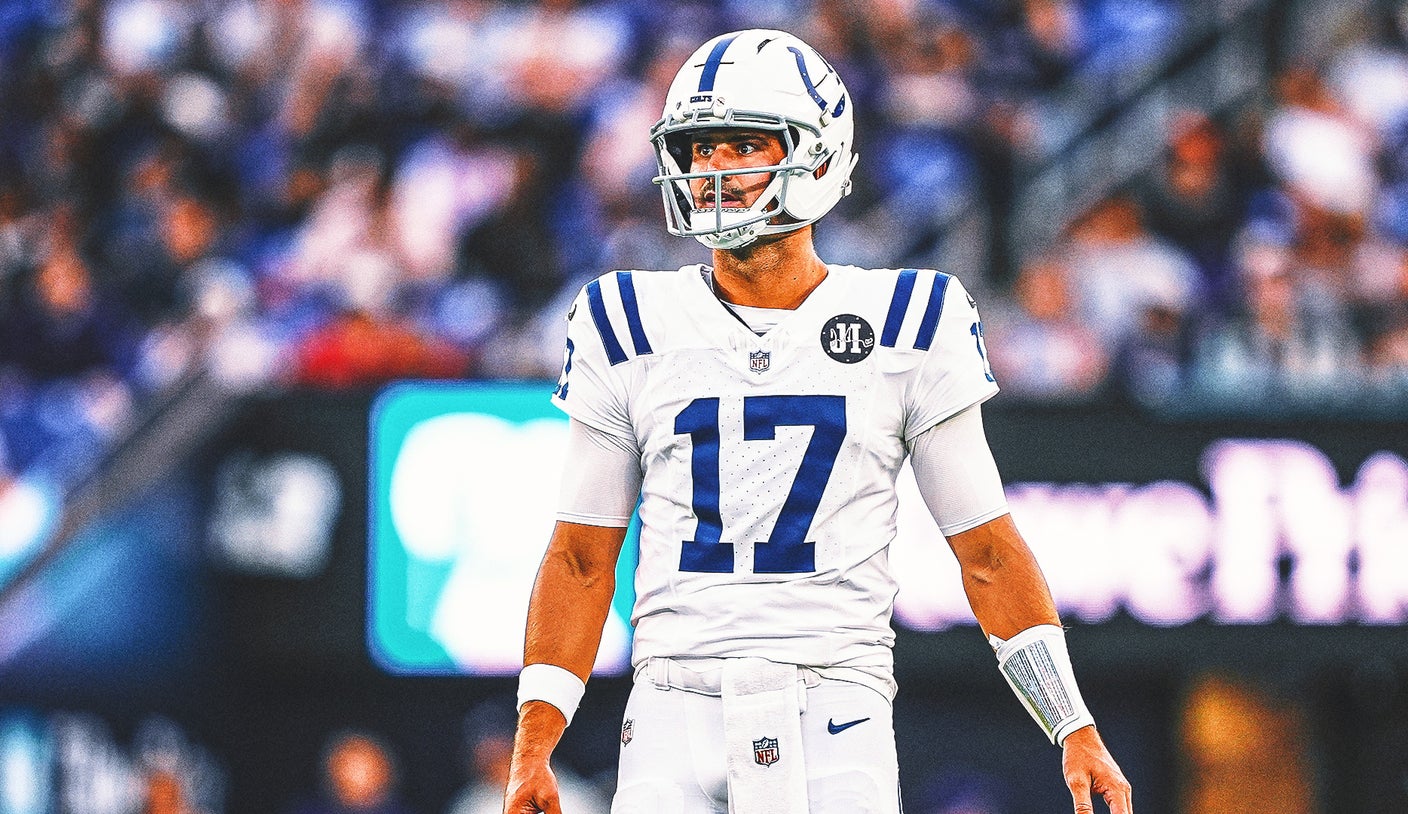
The Indianapolis Colts had a big decision to make on Tuesday, and they took a rare measure to solve the problem.
With quarterback Daniel Jones and wide receiver Alec Pierce both set to become free agents, the Colts opted to place the transition tag on the former ahead of Tuesday’s deadline. Each team could place the franchise or transition tag on an upcoming free agent, making Pierce a free agent without any restrictions.
Indianapolis’ decision gives it a clear runway to negotiate a multi-year deal with Jones as the offseason progresses. It also gives the Colts the opportunity to wait another year before potentially making a long-term commitment to Jones, who is still rehabbing from an Achilles tear he suffered in his breakout 2025 season.
So, what is the transition tag and how does it apply to Jones? Here’s what to know about Jones’ situation.
What will Jones receive on the transition tag as opposed to the franchise tag?
This is one of the key differences between the transition tag and the franchise tag. The transition tag is cheaper than the franchise tag, as the transition tag could potentially cost the Colts $37.833 million million this season if Jones signs the one-year tender. That one-year tender is fully guaranteed.
If Jones had received the franchise tag, he could’ve received $43.895 million this season if he signed the one-year tender. That number also would’ve been fully guaranteed.
What else is different between the transition tag and franchise tag?
The other major difference between the two tags is what takes place if the player who receives it signs an offer sheet elsewhere. If a player on the franchise tag signs an offer sheet with another team, the team that placed the franchise tag on him could either match the offer or receive two first-round picks from the team that signed him.
If a player on the transition tag signs an offer sheet with another team, the team that placed the tag on him can also match the offer. However, that team won’t receive compensation for losing the player if they decline to match the offer.
So, if Jones signs a contract with another team this offseason and the Colts decide not to match, Indianapolis wouldn’t receive any compensation.
Beyond that, there are other similarities between the two tags. Teams can rescind the franchise or transition tag from a player at any time. Players on both tags can get traded, too.
Teams also have until July 15 to agree to a multi-year deal with players that they gave the franchise or transition tag to this offseason. If no deal is reached by then, the player can either play the season on the tag or sign a restructured one-year deal.
How rare is the usage of the transition tag?
Very rare.
Kyle Dugger was the last player to receive the transition tag. The New England Patriots gave their former safety the transition tag in the 2024 offseason, with the two sides eventually agreeing to a deal.
Prior to Dugger, the last player to receive the transition tag was running back Kenyon Drake, who received it from the Arizona Cardinals in 2020.
It’s been an even longer time since a quarterback has received the transition tag. Jeff George was the last quarterback to receive the transition tag, getting that tag placed on him by the Atlanta Falcons in 1996. He eventually signed a one-year, $3.6 million deal with the Falcons after holding out into training camp.
That actually began the end of George’s time in Atlanta, getting suspended by the team for the remainder of the 1996 season after an argument he had with head coach June Jones. He signed with the Oakland Raiders in the following offseason.
So, the Colts will certainly hope history doesn’t repeat itself here. Beyond Jones, the only quarterbacks under the Colts’ control are Anthony Richardson Sr. and Riley Leonard. But Richardson has requested a trade this offseason.
What’s next for the Colts, Jones?
Tuesday’s move at least gives the Colts assurance that they’ll be able to at least have a say in where Jones ends up playing in 2026. But any team interested in Jones knows that they no longer need to give up compensation for him, unless they know the Colts will match any contract the quarterback signs. But most indications seem to be that Indianapolis plans to have Jones at quarterback in 2026.
As for Pierce, the Colts can still work out a deal with him before the start of free agency on Monday. But Indianapolis now runs a greater risk of losing the standout wide receiver following Tuesday’s developments.
Read the full article here