






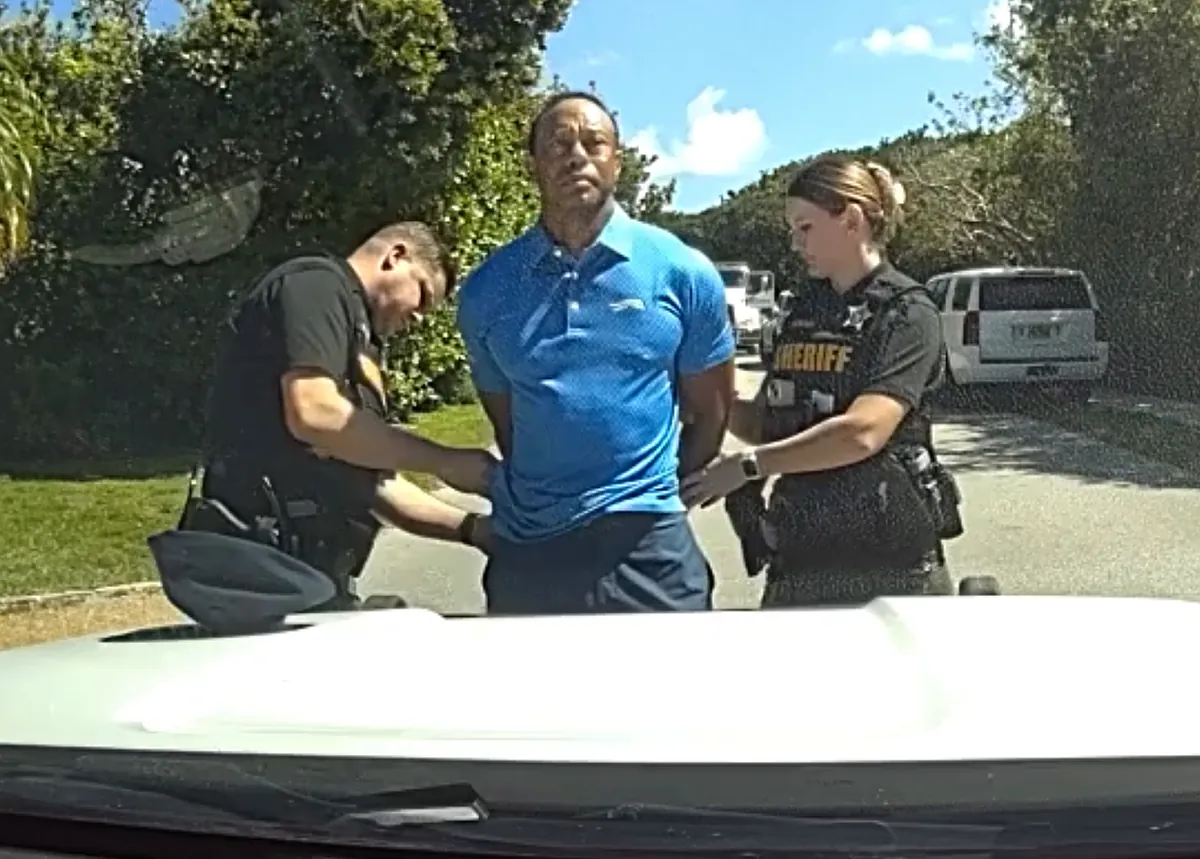
The golf world has been rocked after Tiger Woods was officially charged with driving under the influence following a serious crash in Florida last month.
The charges mark another challenging chapter in the career of one of the sport’s most iconic figures, as legal consequences now loom alongside concerns about his health and future.
According to reports, Tiger Woods has been charged with DUI and refusing to submit to a chemical or physical test.
Both charges are classified as misdemeanors under Florida law, but they still carry potentially significant penalties, including fines, license suspension, and even jail time depending on the circumstances.
The incident stems from a March 27 crash in which Woods allegedly lost control of his vehicle.
Authorities claim he was speeding when he clipped another car and ultimately rolled his Range Rover.
Law enforcement officials reported that Woods displayed “severe signs of impairment” at the scene, and two hydrocodone pills were later discovered in his possession.
In the aftermath, Tiger Woods publicly acknowledged the seriousness of the situation and announced he would step away from the game to focus on recovery.
“I know and understand the seriousness of the situation I find myself in today,” he said. “I am stepping away for a period of time to seek treatment and focus on my health. This is necessary in order for me to prioritize my well-being and work toward lasting recovery.”
He continued, “I’m committed to taking the time needed to return in a healthier, stronger, and more focused place, both personally and professionally. I appreciate your understanding and support, and ask for privacy for my family, loved ones and myself at this time.”
What penalties could Tiger Woods face under Florida law?
While the charges against Tiger Woods are misdemeanors, the legal implications are still serious.
In Florida, a first-time DUI offense can result in fines ranging from several hundred to a few thousand dollars, along with up to six months in jail.
However, additional factors, such as refusing a chemical test or causing property damage, can increase the severity of penalties.
Refusal to submit to testing often leads to an automatic driver’s license suspension and may be used as evidence in court.
Combined with the details of the crash, prosecutors could argue for stricter consequences, although jail time is not guaranteed.
Legal experts note that high-profile defendants like Tiger Woods are typically treated the same as any other individual under the law, though their cases often attract heightened public scrutiny.
In many DUI cases, outcomes may include probation, mandatory substance abuse programs, and community service rather than incarceration, particularly for first offenses.
This is not the first time Woods has faced legal trouble related to driving. A prior incident in 2017 also involved impairment, though he later stated it was due to a mix of prescription medications rather than alcohol.
That history could factor into how the court views the current case.
Beyond the courtroom, the impact on Woods’ legacy could be significant. Once widely regarded as the face of golf, he has spent years rebuilding both his career and public image after past controversies and injuries.
This latest development threatens to complicate that narrative once again.
For now, Tiger Woods‘ focus appears to be on recovery and accountability.
Whether this moment becomes another turning point or a lasting setback will depend not only on the legal outcome, but also on how he responds moving forward.
Read the full article here