



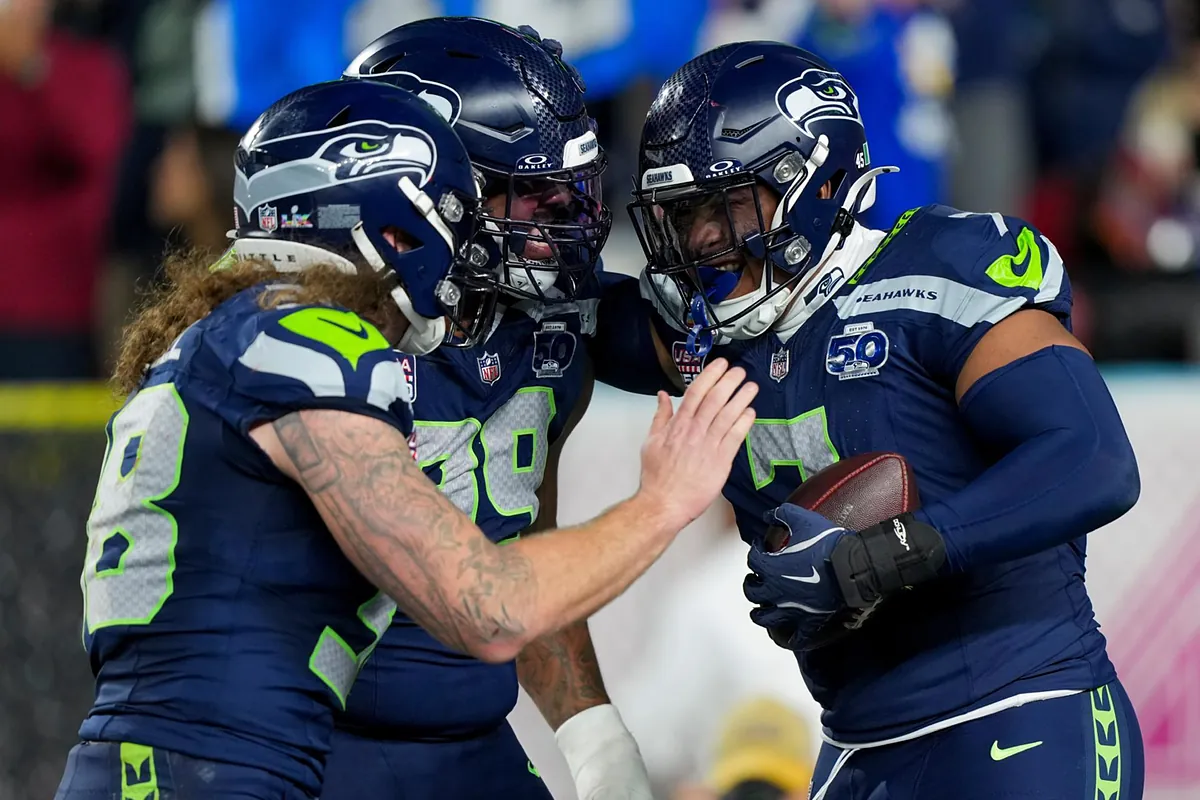
The Seahawks’ front office made a risky decision at the time, specifically in 2022 when they sent Russell Wilson to the Denver Broncos. Back then, the move drew heavy criticism, but after defeating the New England Patriots 29-13 in Super Bowl LX, they confirmed that it was the perfect gamble.
What was once interpreted as the beginning of a long journey through the wilderness ended up becoming the ignition point of a new era. While Wilson struggled to find stability in Denver, Seattle transformed the assets acquired in the trade into a foundation for building the most dominant defense in the NFL-one that shut down Drake Maye’s offense in San Francisco.
The contrast in realities could not have been starker: a former quarterback grappling with unmet expectations and a franchise that quietly assembled a competitive machine that not only won the championship, but also came within minutes of holding its Super Bowl opponent scoreless.
The Draft as a roadmap to greatness
Success was not based solely on stockpiling draft picks, but on the precise execution of a plan designed by general manager John Schneider. Every selection reflected a clear vision. From that process emerged names now etched into Seattle’s collective memory. Devon Witherspoon, selected in the first round of the 2023 Draft, immediately became the face of the defense. In Super Bowl LX, his constant pressure on Drake Maye perfectly symbolized a defensive unit capable of dominating without gimmicks or concessions.
Boye Mafe and Derick Hall, also acquired through picks obtained in the Denver trade, formed a fearsome pass rush that set the tone for the league during the 2025 season. That defensive strength was complemented by the offensive stability provided by Charles Cross, a key piece in protecting the blind side of a revitalized Sam Darnold. Darnold found in Seattle the ideal environment to relaunch his career when many believed he would never shine again-today, he can confidently say they were wrong.
Beyond the field, the decision carried decisive implications for the franchise’s financial health. By avoiding the massive contract Wilson signed with the Broncos, the Seahawks preserved crucial salary cap flexibility. That margin allowed them to surround their new quarterback with elite talent and build roster depth that ultimately made the difference in the most critical moments of the season.
With the Vince Lombardi Trophy back in their display case, there is no longer room for doubt or debate in Seattle. What was once labeled a “football suicide” is now studied as a model of visionary management.
The Seahawks did not just win a championship-they proved that in the modern NFL, no individual is greater than a coherent, sustained strategy executed with precision.
Read the full article here