





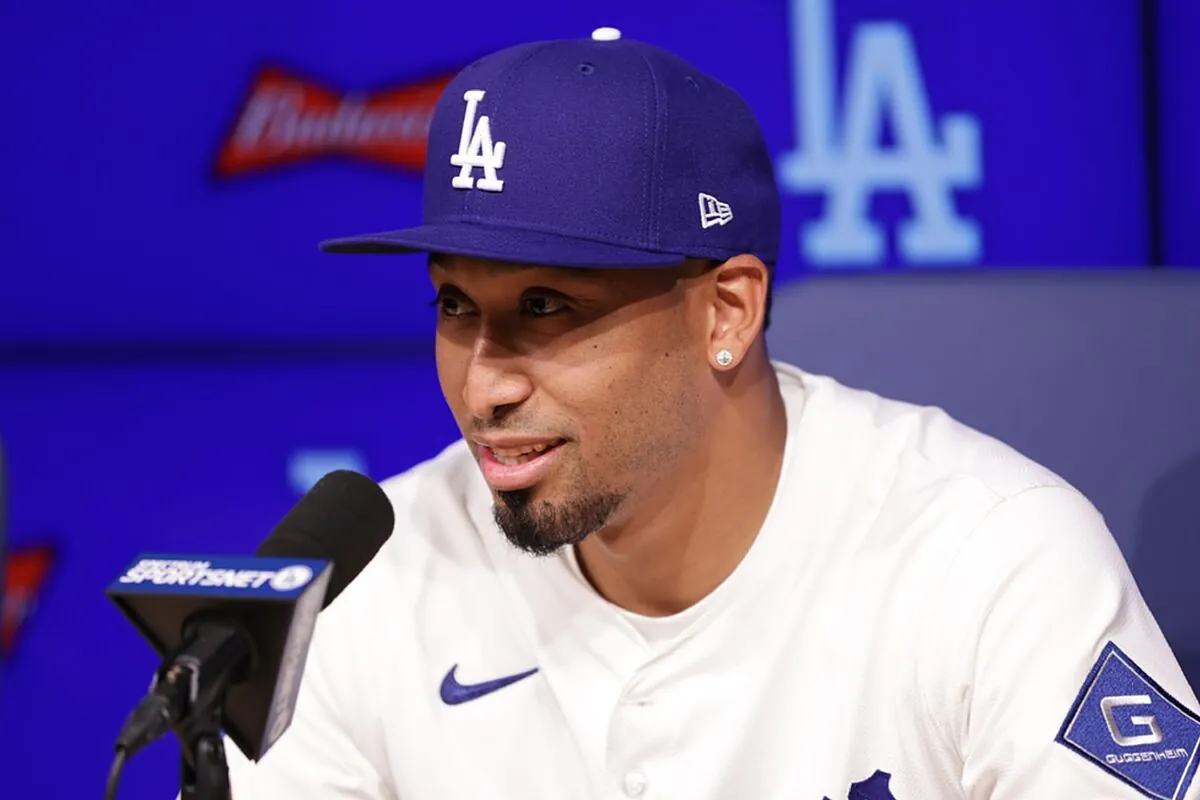
The Atlanta Braves made a determined but ultimately unsuccessful attempt to prevent All-Star closer Edwin Diaz from joining the Los Angeles Dodgers, showing how seriously the organization pursued bullpen upgrades during the offseason.
As Diaz entered free agency after opting out of his deal with the New York Mets, Atlanta positioned itself as a serious contender.
Their move was not only motivated by internal needs but also by the competitive ramifications of a rival strengthening its roster.
A report from ESPN indicated the Braves offered Diaz a longer-term contract than the one he eventually accepted from Los Angeles.
While the Dodgers secured Diaz on a three-year, $69 million deal that included deferred money and a conditional option, Atlanta‘s proposal reportedly extended to five years.
That length reflected the Braves‘ belief that Díaz could remain an elite ninth-inning presence well into his late 30s.
Despite the additional years, Diaz prioritized contract structure and average annual value over length.
The Braves, like the Mets, were unwilling to fully match his preferred financial terms, which emphasized higher annual compensation with limited deferrals.
That difference ultimately proved decisive, as Diaz ultimately signed for a guaranteed three-year, $69 million deal.
Diaz form reaps financial rewards
Diaz‘s value on the open market was reinforced by a strong return to form, re-establishing himself as one of the premier closers in Major League Baseball.
His velocity, strikeout rate, and late-game dominance made him a coveted target across the league and a particularly appealing solution for teams with championship aspirations.
Following his decision, Diaz explained his choice clearly, saying, “It wasn’t easy. I spent seven years in New York. They treated me really good. They treated me great.
“But I chose the Dodgers because they are a winning organization. I’m looking to win, and I think they have everything to win. So picking the Dodgers was pretty easy.”
For the Braves, the pursuit of Diaz was about more than just adding another arm. Atlanta entered the offseason focused on stabilizing late-inning relief after experiencing inconsistencies at the back end of games.
Pairing Diaz with an already strong pitching core would have given the Braves one of the most formidable bullpens in the National League.
There was also a clear strategic element. The Dodgers remain one of the NL‘s most dangerous postseason teams, and allowing them to secure an elite closer addressed a known weakness. Atlanta‘s offer was, in part, an effort to prevent a direct rival from making a significant upgrade.
Atlanta pushed hard for Diaz
Even with Diaz tied to a qualifying offer that would have cost the Braves a compensatory draft pick, the organization was willing to absorb that loss.
The willingness to sacrifice future assets highlighted how strongly Atlanta valued immediate contention.
When the deal failed to materialize, the Braves pivoted quickly, reinforcing their bullpen through alternative moves while maintaining financial flexibility.
Although they did not succeed in blocking Díaz from heading to Los Angeles, their aggressive pursuit sent a clear message across MLB.
The Braves may have fallen short in this particular chase, but their attempt to prevent Diaz from joining the Dodgers reflected a front office fully aware that the margin between contenders is razor-thin.
Read the full article here