





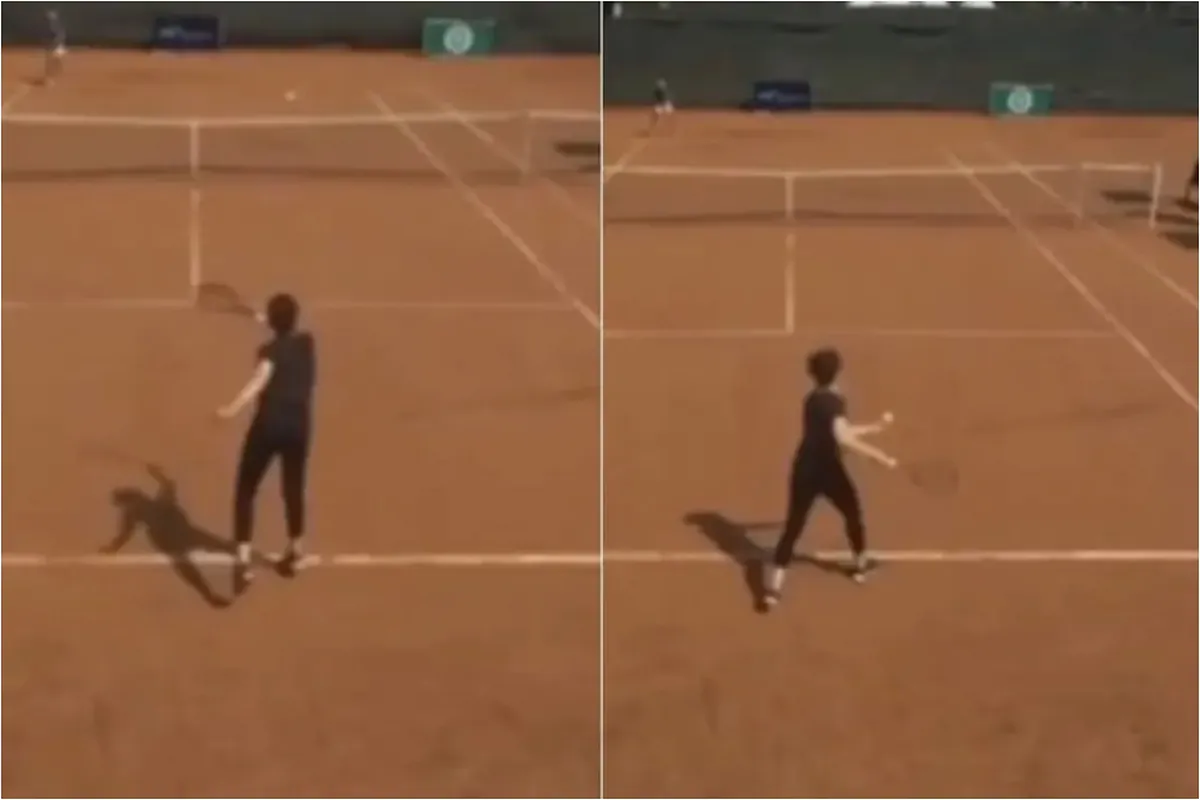
The case of Egyptian tennis player Hajar Abdelkader is already known: she played in the ITF W35 tournament in Nairobi (Kenya) despite demonstrating that she lacked the necessary level to play tennis professionally. Once the video went viral and the news became known worldwide, it opens the door to other types of questions.
The first and most important is how it was possible for a player with no level to play in a professional tournament causing quadruple damage: to herself; to the tournament and to the circuit, whose seriousness is called into question, and to the opponent, who is deprived of acquiring rhythm and experience in a first round.
Hajar benefited from a ‘wild card’. The wild card is an institution in professional tennis: it is the right of the tournament to invite players to participate and this right is free, although regulated: some places are reserved for invited players both in the final draw and in the preliminary round. These are usually young tennis players with potential, established players who for some reason could not register in time, players coming out of injury…
On occasions, these wild cards, because of their important value for the development of young tennis players, are used as ‘bargaining chips’: federations, tennis schools, management agencies and other organisations establish agreements with tournaments, sometimes reciprocal, so that their players can climb the ladder in their progression by facing higher category opponents. This requires, and is what normally happens, that the invited player is able to play that match, whether he or she wins it or not
ITF tournaments are fundamental to the development of tennis, although they are sometimes almost ‘clandestine’: they account for 90% of the professional tennis that is usually played in the world – this week, for example, seven tournaments of the women’s circuit of this category are being played. The problem is that it is not uncommon for these tournaments to suffer in their lower levels of organizational weakness. For years, it has been a constant clamor in tennis at these levels the many difficulties of tennis players to follow and finance a professional career with them because of the low level of their financial endowment. The figure indicating their category is their financial endowment in thousands of dollars.
In the more modest steps of the same – those of category 15 and 35 – players without ranking can be invited, and this has been the case of Abdelkader. Because the fact is that Hajar Abdelkader ‘does not exist’. She does not appear in the ITF rankings – this was her first official match on the circuit – nor in the archives of the Egyptian Federation, although in the ITF file – which as we say includes this single match – it states that she started playing at the age of 14
It is clear that this issue will continue for some time because both the ITF and the Federation itself are aware of the damage done to their image. Randy Walker, the tournament director, said that what happened “directly undermines the image and integrity of the sport. The tournament promoter should be immediately replaced for allowing this entry.” The ITF has yet to comment on the matter and the Egyptian Federation has announced that it will launch an investigation. Although there has always been talk of financial incentives – the famous ‘fixed’ – that some tournaments can offer players to participate, there are no persistent rumors of ‘buying’ wild cards in the circuits, although the circumstance is not ruled out by players and coaches who frequent this circuit. In fact, there is an article in the Tennis Anti-Corruption Program that specifies that you cannot pay for an invitation.
It goes without saying that the ‘Abdelkader case’ will continue to develop, because the ITF cannot afford to have doubts about its seriousness added to the organisational problems of its circuit. After each tournament, the ITF (like the ATP and WTA) conducts an evaluation that can result in sanctions or demotion. The organisation of the tournament was the responsibility of the Kenyan Federation, which had only one local invitee: 19-year-old tennis player Faith Urasa. The other invitees were China’s Ada Yan Shihong and Belgium’s Anouk Vandevelde
Read the full article here