





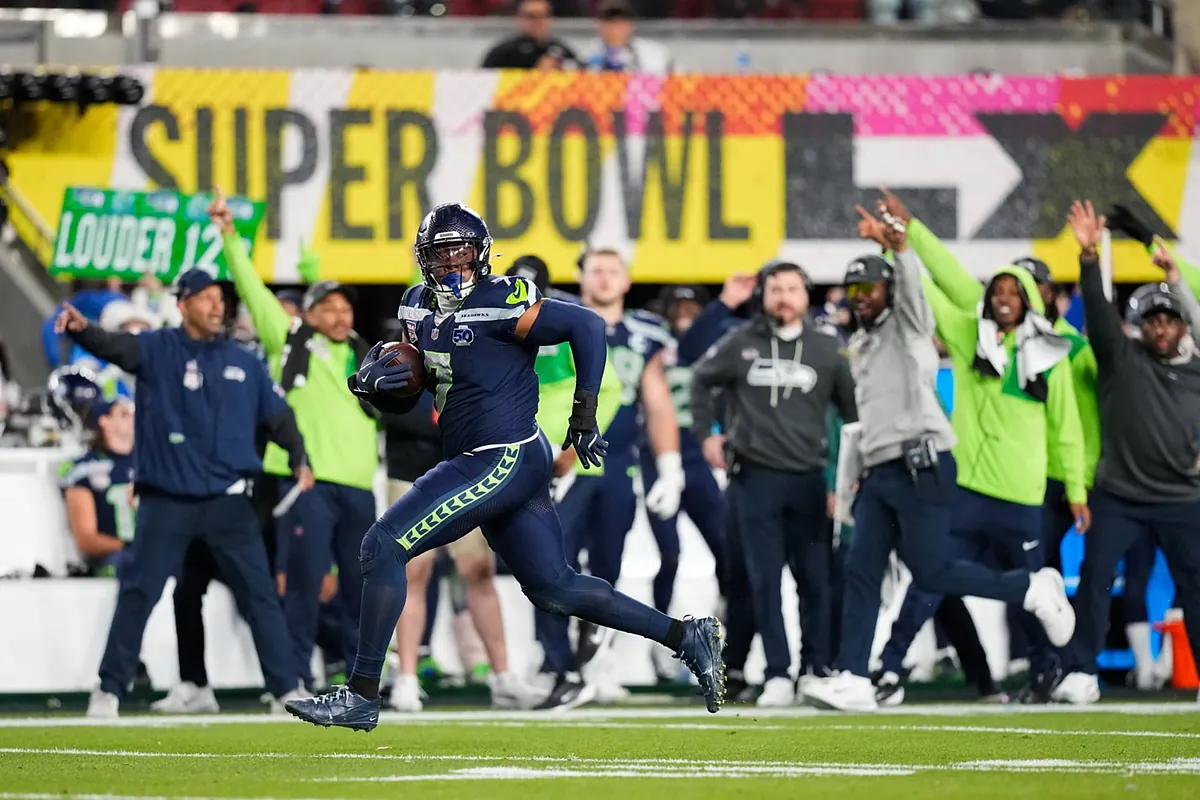
Super Bowl LX featured an unexpected episode that had nothing to do with Drake Maye’s passes or Seattle’s constant defensive pressure. Late in the fourth quarter of the matchup between the Patriots and the Seahawks, the security operation at Levi’s Stadium was exposed when a fan managed to get onto the field, forcing an immediate reaction on the gridiron.
With just under 13 minutes left on the clock, a shirtless man with phrases painted across his chest and back broke through security barriers and ran across midfield with his arms wide open, celebrating his intrusion. While NBC avoided showing the scene on screen, play-by-play announcer Mike Tirico confirmed what had happened during the live broadcast.
The moment took an even more surreal turn when New Englandrookie wide receiver Kyle Williams decided to step in. The intruder lost his footing near the 10-yard line, where the player, along with security personnel, managed to bring him down. After the interruption, the Patriots scored their first touchdown of the game, but the spark was not enough to prevent a 29-13 loss against a Seattle defense that forced three turnovers from Maye.
What legal consequences could he face? California’s penal framework
The unauthorized entry onto the field could result in penalties far more severe than a simple administrative fine. Because the incident took place in Santa Clara, California law enforces strict punishments for this type of conduct at major events:
- Illegal entry onto private property (Penal Code 602): Entering the field without authorization is considered a misdemeanor, punishable by up to six months in jail and fines exceeding $1,000.
- Disorderly conduct (Penal Code 415): By disrupting a global commercial event, a judge may impose additional penalties if resistance to arrest or risk to others is determined.
- Permanent NFL ban: Beyond the legal consequences, the league enforces a zero-tolerance policy, meaning the individual will be permanently banned from all NFL stadiums.
The incident adds to a growing list of similar episodes at recent Super Bowls, such as those in 2021 and 2024, proving that even the most sophisticated security measures cannot fully prevent the pursuit of fleeting notoriety.
The Super Bowl is regarded as one of the most tightly secured events in the world, and its 2026 edition also served as a critical test ahead of the Los Angeles 2026 Olympic Games and the 2026 FIFA World Cup.
Read the full article here