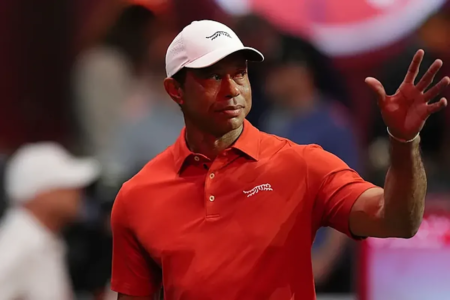





The golf world was buzzing this week after Rory McIlroy made a provocative remark about Tiger Woods – one that many interpreted not as playful banter, but as a harsh, even cruel jab.
While warming up aimlessly ahead of a promotional event for the Optum Golf Channel Games, McIlroy took the shot over a dummy target – ostensibly “just for fun” – but added a comment that left fans reeling: “His body’s already banged up, I didn’t want to add to it.”
Although McIlroy quickly insisted the remark was meant in jest, context and timing landed poorly – particularly considering Woods’ long-publicized history of injuries and multiple surgeries.
Many felt the Northern Irishman’s quip, about another icon’s physical decline, crossed a line that separates competitive banter from unnecessary cruelty.
The fallout: sympathy for Woods, criticism of McIlroy
Historically, McIlroy and Woods have shared a relationship rooted in mutual respect – often exchanging supportive messages after shared competitive setbacks.
Yet this time, McIlroy‘s dig struck as personal and pointed. In press interviews, he defended the comment as a light-hearted reaction to a promotional stunt – but didn’t deny saying it. Critics argue that, whether intentional or off-handed, the tone revealed an insensitivity to physical realities few athletes of Woods’ age escape.
Sports journalists and fans alike highlighted that Woods’ recent Achilles tendon rupture – followed by a lumbar disc surgery in October 2025 – hasn’t erased the magnitude of his legacy.
Many said McIlroy‘s joke overlooked the respect owed to one of golf’s greatest champions, especially during a period of recovery and uncertainty about future participation.
Meanwhile, social media erupted. Some users called McIlroy‘s comment a “low blow,” while others defended “golf banter – tough by nature.”
The debate revived memories of past controversies involving aged legends being mocked for deterioration – a trend many hoped the sport had left behind.
Whether classified as a harmless joke or a distasteful swipe, the episode raises deeper questions about empathy in elite sports – and how respect for legacy should outlast rivalry.
Read the full article here