




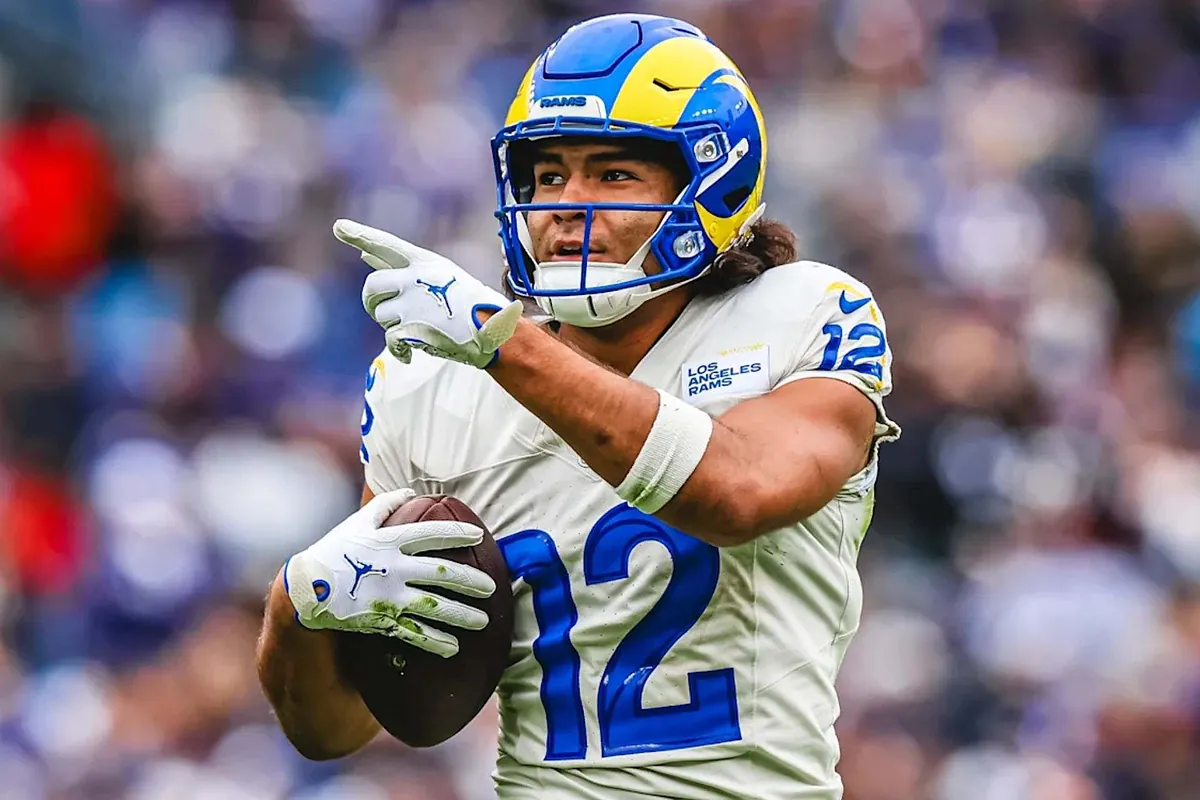
Few young receivers have made as immediate an impact as Puka Nacua of the Los Angeles Rams. After bursting onto the scene with record-setting production early in his career, he established himself as one of the NFL‘s premier offensive weapons.
But in recent months, conversation surrounding the Pro Bowl wideout has shifted from highlight-reel catches to questions about his off-field behavior, with some fans invoking the name of former All-Pro Antonio Brown.
The comparison is not about talent. At his peak, Brown was arguably the most dominant receiver in football, leading the league in receiving yards twice and receptions twice during his tenure with the Pittsburgh Steelers.
Nacua, meanwhile, shattered rookie records in 2023 with 105 receptions and 1,486 yards, instantly becoming quarterback Matthew Stafford‘s primary target in Sean McVay‘s offense.
His production and toughness over the middle of the field quickly earned league-wide respect. What has drawn scrutiny, however, are a series of recent viral moments that sparked online backlash.
One widely circulated clip stemmed from a livestream appearance in which Nacua made a hand gesture that many viewers labeled antisemitic.
The moment quickly went viral on social media, prompting criticism and forcing the recipient to respond publicly. According to the original report, Nacua wrote that he “had no idea” the gesture carried offensive connotations.
Though he issued that clarification, the incident opened the door for intensified scrutiny. In the hyper-accelerated world of NFL discourse, even fleeting moments can fuel broader narratives.
How the Antonio Brown narrative took shape
The emergence of Brown‘s name in online discussions reflects a cautionary tale NFL fans know well.
Once regarded as a model of elite consistency, Brown‘s career eventually became overshadowed by controversy, public disputes, and erratic behavior that led to short-lived stints with the (then) Oakland Raiders and the Tampa Bay Buccaneers after his departure from Pittsburgh.
Social media amplified those episodes in real time, transforming performance dominance into tabloid-style spectacle. For some observers, even isolated incidents involving Nacua raise concerns about how quickly perception can change.
On social media, several users drew direct comparisons. One fan wrote, “Puka nervously gives me Antonio Brown vibes,” while another suggested the wideout might be on an “AB speedrun.”
While those reactions reflect online exaggeration more than measured analysis, they illustrate how quickly narratives develop.
Nacua not yet as troubled as Brown
It’s important to note that Nacua‘s situation remains far from the prolonged pattern that ultimately defined Brown‘s career trajectory.
The former BYU standout has not experienced team suspensions, contract disputes, or the organizational breakdowns that marked Brown‘s later years. Instead, the debate centers largely on social media optics and public perception.
From a football standpoint, Nacua continues to trend upward. His physicality after the catch, route versatility, and chemistry with Stafford make him a foundational piece of the Rams offense.
Through his first two seasons, he has already established himself among the league’s most reliable volume targets and remains central to Los Angeles‘ playoff ambitions.
For Nacua, the path forward remains clear. If he continues stacking elite production and avoids further controversy, the current discourse will likely fade as quickly as it surfaced.
But in today’s league, perception travels fast – and once a narrative takes hold, even rising stars aren’t immune to it.
Read the full article here