



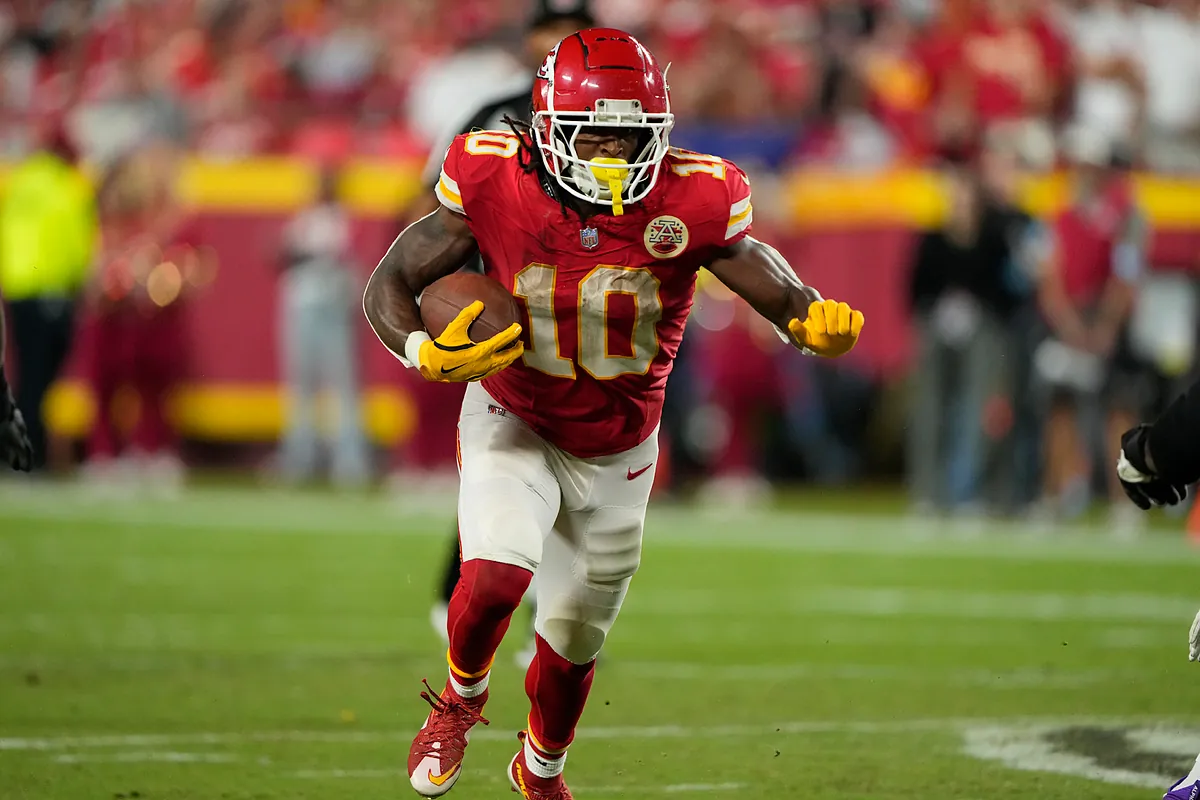
Isiah Pacheco has been handed a $46,371 fine by the NFL after a collision with DaRon Bland during a game against the Cowboys that went unflagged on the field. While the play seemed routine to fans and players, the league disagreed.
The incident occurred when Pacheco caught a short pass and made contact with Bland near the sideline.
There was no penalty called during the game, and commentators did not highlight the play, making it appear ordinary.
While Pacheco did lower his helmet before the hit as seen in the video replay, it was not the typical crown-of-the-helmet contact the NFL often penalizes.
Despite this, the league viewed it as a significant violation.
Discrepancy between league rules and player perception
The Cowboys did not react as if a foul had occurred, underscoring a common disconnect between the NFL office and players regarding helmet rules.
What officials see as a dangerous infraction can look like a normal play to athletes on the field.
The fine is one of the largest issued so far this season, reflecting the league’s strict stance on player safety. It also highlights ongoing challenges in clearly communicating which helmet contacts are considered illegal.
For Pacheco and the Chiefs, the ruling serves as a reminder that actions often judged minor in the moment can carry serious repercussions after review. “Use of the helmet” violations are now being monitored more closely, even when officials do not call a penalty during the game.
This isn’t the first time a player has been penalized retroactively for such contact. For example, Zach Charbonnet was fined roughly $45,020 in 2024 after being judged to have illegally lowered his helmet while blocking.
More recently, Saquon Barkley was hit with a $46,371 fine under similar circumstances, even though officials on the field didn’t throw a flag.
According to the league’s published fines and appeals schedule, a first offense for “impermissible use of the helmet” typically starts around $22,500.
The fact that Pacheco was fined more than double that suggests the league considered this a repeat-level offense or deemed the act especially egregious.
From a league standpoint, cracking down on helmet-first contact, whether from defenders or ball carriers, is part of a broader effort to reduce head and neck injuries.
The updated rule, expanded in 2023, aimed to make helmet contact more consistently punishable, either with in-game penalties or postgame fines.
Read the full article here