





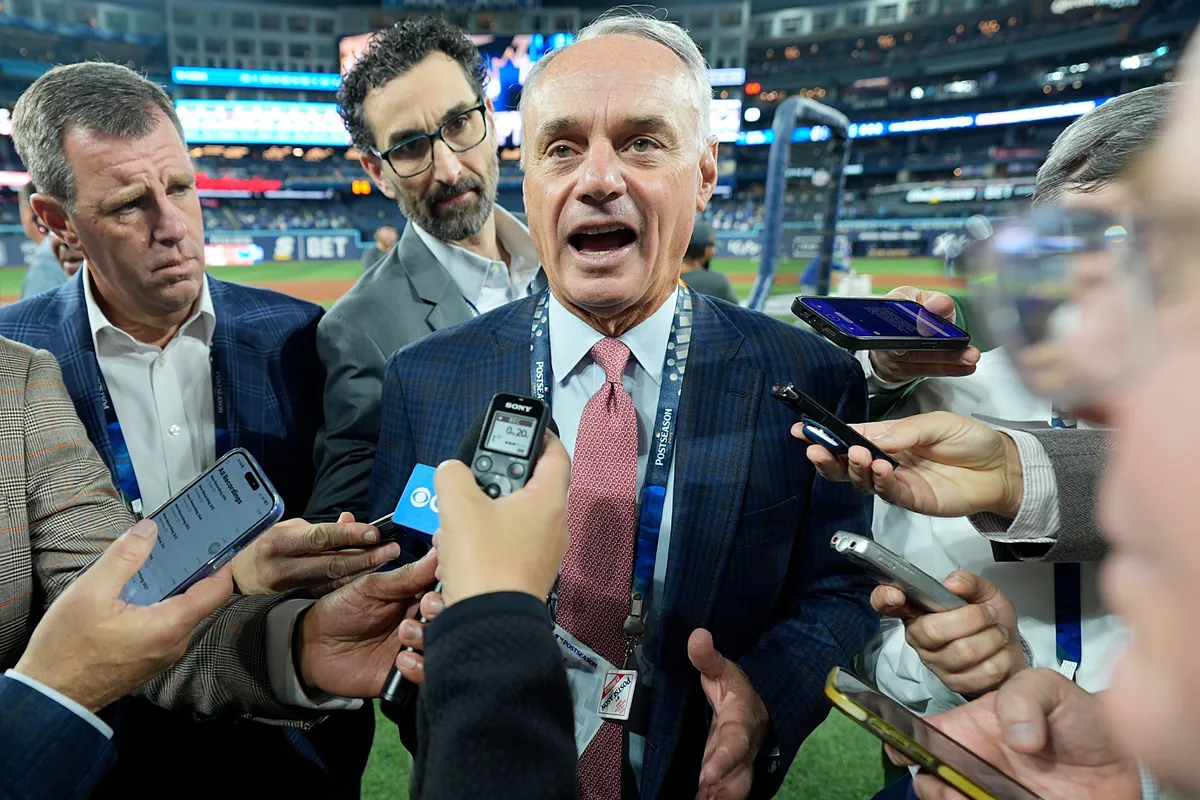
MLBcommissioner Rob Manfredhas confirmed that the league has discussed radical ideas to change the format of the regular season, with the aim of modernizing the spectacle while taking better care of the players.
Rob Manfred opens the door to historic transformation in MLB
During a radio interview with WFAN, commissioner Rob Manfred acknowledged that MLB has put on the table proposals that until recently seemed unthinkable. These include the possibility of a split season and the creation of an in-season tournament, similar to the NBA Cup.
We understand that 162 games is a very long load
The executive was clear in pointing out that the current 162-game schedule is a considerable burden, hinting that reducing games would be almost inevitable to implement these formats.
How would a split season work in MLB?
The idea of a split season is not new. It has been used frequently in the Minor Leagues and, in exceptional cases, in Major League Baseball, such as in the 1892 and 1981 seasons.
Under this system, the campaign is divided into two halves, and the teams that lead each section secure a place in the playoffs. The format could increase competitiveness, maintain interest throughout the year and reduce the pressure on a single overall table.
The most controversial option is that of an in-season tournament, a novelty that could divide more traditional fans. Tradition vs. innovation.Manfred acknowledged that baseball is a sport deeply tied to its historical records, which complicates any adjustments to the regular schedule.
Even so, the league believes that this type of competition could attract new audiences, especially young and international markets, as long as it has the approval of the MLB Players Association (MLBPA).
MLB could increase the number of teams in the league
Manfred also reiterated his interest in expanding the league to 32 teams and reorganizing it into eight geographically based divisions of four clubs. This move would reduce travel, improve player health and optimize postseason schedules for fans in the United States. However, he made it clear that cities with two teams, such as New York or Los Angeles, would not share a division.
Since the implementation of the pitch clock, the universal designated hitter and the automated ball and strike counting system, Manfred has shown that he is not afraid of bold decisions. Some have been applauded, others harshly criticized, but all have marked an era and with record revenues and a growing audience, MLB seems willing to continue to evolve.
Read the full article here