





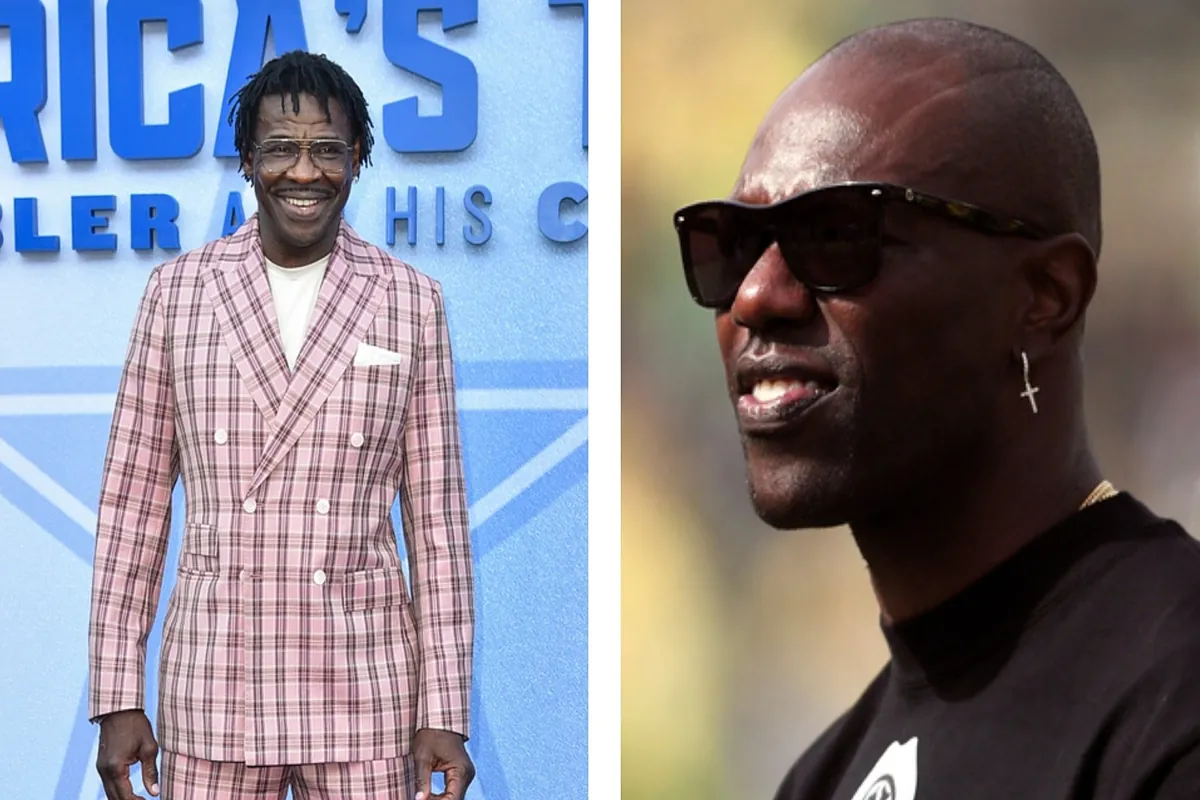
Rivalry on the football field has morphed into a new chapter in the annals of NFL debate. Hall of Fame receivers Terrell Owens and Michael Irvin have once again found themselves at odds about legacy in the game. The latest spark to relight their feud was Irvin’s omission of Owens when discussing the greatest wide receivers in history.
The controversy dates back to earlier in the year, when Owens appeared on a podcast and boldly claimed there was “a gap” between himself and Irvin.
Owens leaned on his numbers, 153 career touchdowns and multiple All-Pro honors, in contrast to Irvin’s 65 touchdowns and three Super Bowl rings. For Owens, statistical dominance should speak louder than team titles.
Irvin was quick to respond. On X, he posted images of WWE-style championship belts as a jab toward Owens’ emphasis on stats. The belts represented Irvin’s three Super Bowl championships with the Dallas Cowboys, an aesthetic display of what he considered his own defining credentials.
In the middle of this tension stepped Andre Reed, another Hall of Famer and longtime peer. Reed sided with Owens via Instagram, praising him as a top-five receiver. Owens re-shared Reed’s post with a sharp turn: “He (Irvin) knows I’m ALWAYS mentioned TOP 3 regardless of his 3 Super Bowl rings!! Lowkey hater!”
Fans and analysts have weighed in passionately. Some lean toward Irvin’s narrative – championship pedigree, leadership, and impact in the franchise’s golden era. Others champion Owens’ argument – that his individual brilliance, longevity, statistics, and ability to elevate teammates deserve equal footing.
Championship vs. Statistics: Which defines greatness?
This debate echoes one of sports’ oldest schisms: does greatness belong to champions or to record-breakers?
Irvin’s defenders point to his role as a cornerstone of Dallas’ dynastic run in the 1990s. They argue that his ability to deliver in big games, guide teammates, and help win titles elevates him beyond mere numbers.
Meanwhile, Owens’ supporters lean on his statistical output as irrefutable. He ranks second all-time in receiving yards and third in touchdowns, even though his career spanned multiple teams and quarterbacks. For many, that consistency under varied conditions reinforces his brilliance.
It’s worth noting that some overlap already exists-Irvin and Owens’ careers bridged eras, and the Hall of Fame itself has taken into account both on-field feats and off-field impact.
Yet what divides them now is how each sees the proper metric for greatness. Owens sees raw production as the truest measure; Irvin sees winning when it matters most as the ultimate mark.
The debate also reflects evolving fan sensibilities. In what many call the “analytics era,” raw numbers and milestones carry more weight than ever. But for traditionalists, momentous plays, leadership, and championship moments remain the gold standard.
For now, Owens and Irvin seem unlikely to reconcile. Their clash is less about animosity and more about differing philosophies. Owens insists on recognition based on accumulation and function; Irvin contends that football is ultimately a team game where legacy must align with title success.
As long as both are remembered among the game’s greatest, their rivalry continues not in shadowy digs or salvos, but in how future fans and analysts choose to weigh football history. The greatest wide receiver debate, once dormant, has been reawakened.
Read the full article here