



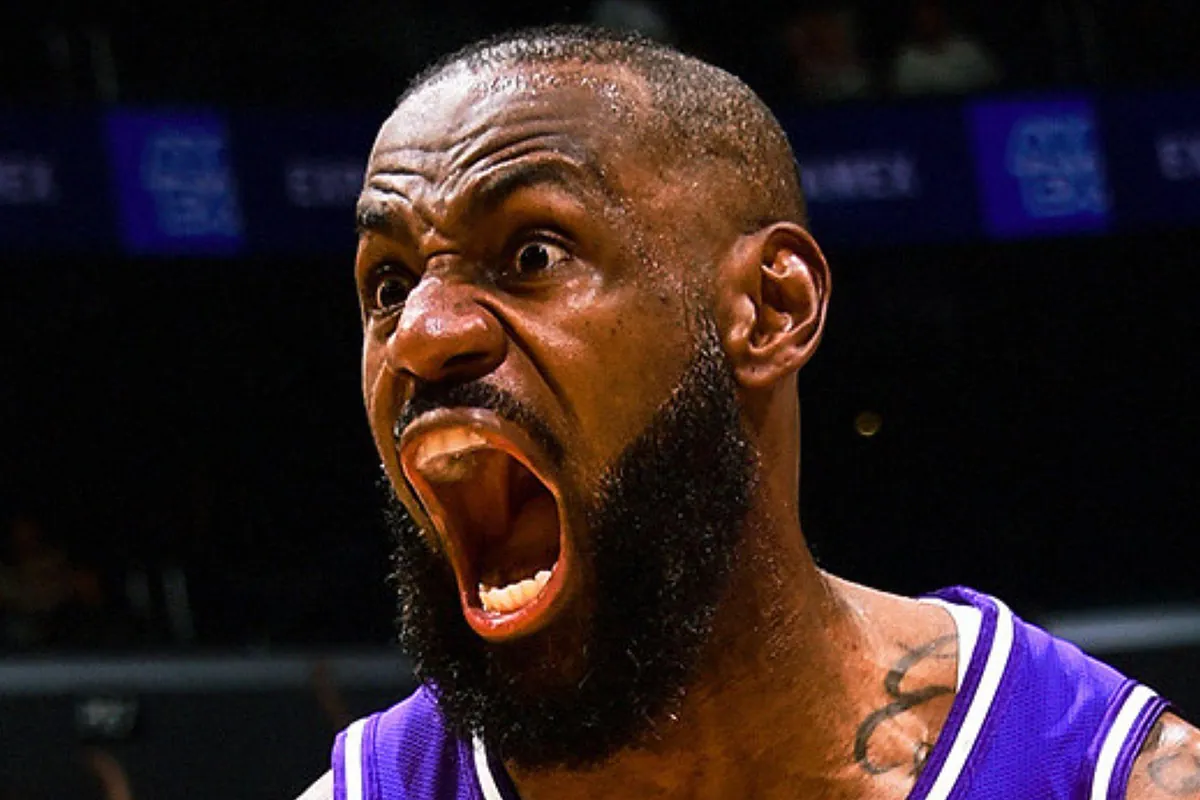
LeBron James is approaching territory no NBA player has ever truly occupied. At 40 years old, with his 24th season on the horizon, the Los Angeles Lakers star continues to perform at a level that challenges long-held assumptions about aging in professional basketball.
James will turn 41 on December 30, and yet his production, influence, and durability remain closer to his prime than to a farewell tour. Last season offered another reminder of how unusual his longevity is. Despite managing the wear and tear that comes with two decades in the league, James led the Lakers back to the playoffs while averaging 25.4 points, nine rebounds, and 5.6 assists per game.
Those are not the numbers of a role player extending a career; they are the numbers of a franchise cornerstone. No player in NBA history has combined this level of output with such sustained longevity. From a scientific perspective, James is operating well beyond the typical athletic curve.
The effects of time on LeBron’s body
Research consistently shows that explosive strength, speed, and power peak between ages 25 and 30 before gradually declining. James has experienced that reality. Tracking data indicates his average attack and defensive speeds have dropped roughly five percent over the last decade. What separates him from his peers is how he has compensated for those changes.
As his body has evolved, his basketball mind has expanded. James now relies less on constant downhill attacks and more on energy management, positioning, and timing. He uses his size and strength in the post, orchestrates the offense as a primary playmaker, and picks his spots with precision. His offensive game has shifted toward efficiency rather than volume of movement, allowing him to conserve energy while maintaining elite impact.
One of the most notable adaptations has been his perimeter shooting. James attempts nearly 47 percent more three-pointers than he did early in his career, a change that reflects both strategic evolution and biomechanical necessity. Shooting from distance places less stress on his body than repeated drives into traffic, helping him stay productive while reducing physical strain.
James’ commitment to training is unmatched
Behind the scenes, LeBron‘s commitment to training and recovery has become as legendary as his on-court performances. He invests millions of dollars annually in body maintenance, utilizing cryotherapy, hyperbaric chambers, massage therapy, functional stretching, controlled strength training, and carefully planned sleep routines. Every element is designed to maximize movement quality and accelerate recovery.
As athletes age, VO2 max, the body’s ability to deliver oxygen to muscles, naturally declines, slowing recovery between intense efforts. James has adjusted accordingly, modifying his training loads and intensity. His regimen now alternates explosive work with active rest and targeted sessions aimed at preserving joint health and fast-twitch muscle fibers. The result is a body that can still respond to the demands of an NBA season deep into his 40s.
James’ longevity is also rooted in acceptance and adaptation. Rather than fighting the limits imposed by time, he has redefined what excellence looks like at this stage of a career. Sports science emphasizes that aging well means moving more efficiently, reducing wasted motion, and replacing lost physical advantages with technique, strategy, and decision-making. James has embodied that principle as well as any athlete in modern sports.
Read the full article here