




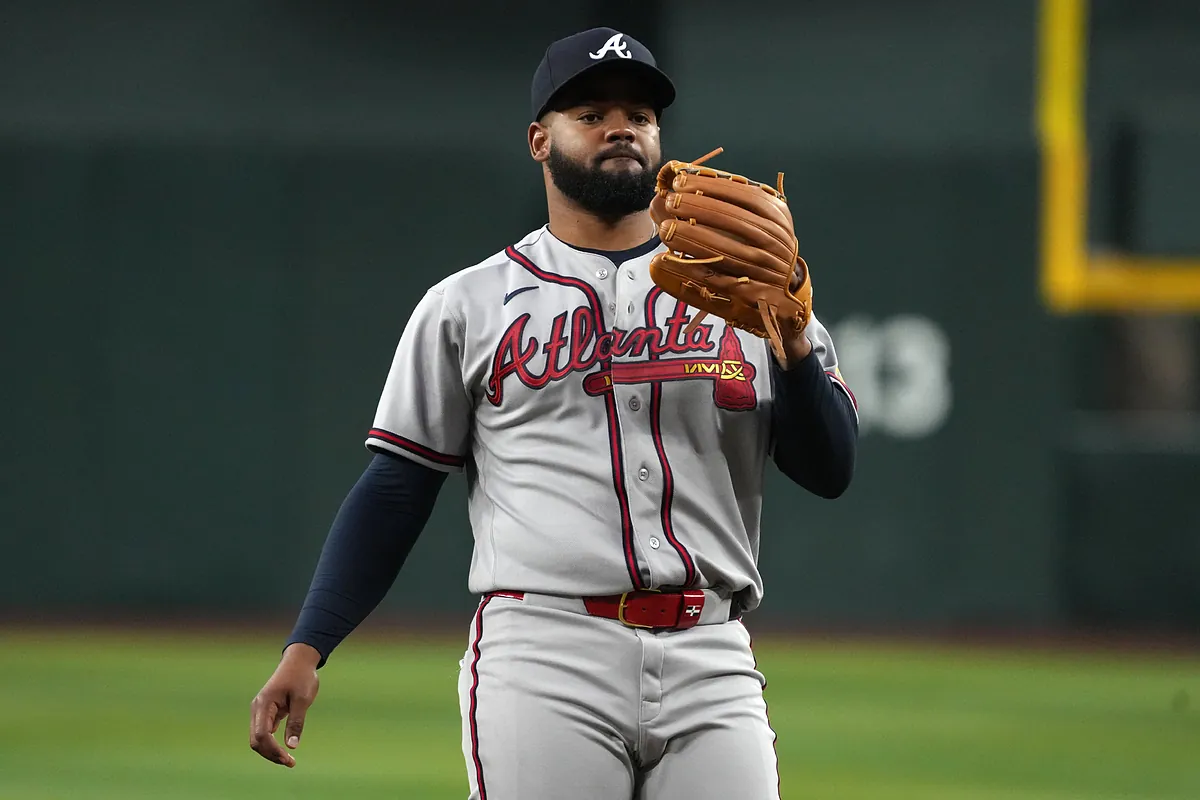
Major League Baseball’s decision to reduce Reynaldo Lopez‘s suspension has left fans and analysts questioning whether accountability is being applied evenly after a volatile incident involving Jorge Soler.
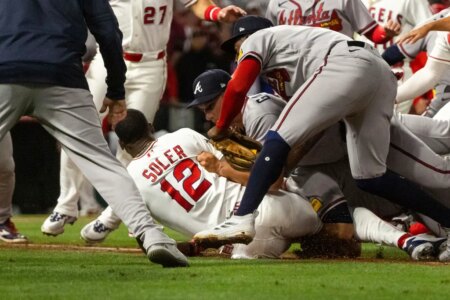
The altercation, which saw punches thrown and both benches clear, initially resulted in identical seven game suspensions for both players. But Lopez‘s successful appeal, cutting his ban to five games, has shifted the conversation, largely because of what it means in practical terms.
As a starting pitcher, Lopez is now expected to return without missing his next scheduled outing, effectively minimizing the sporting impact of the punishment.
The confrontation did not come out of nowhere. Soler had already homered earlier in the game and was later hit by a pitch before tensions boiled over on another high and inside delivery.
“I asked him if everything was OK and the answer he gave me, I didn’t like it,” Soler said through a translator. “That’s why I went out there.”
From there, the situation escalated quickly. Soler charged the mound, Lopez responded, and within seconds both players were exchanging punches as teammates rushed in. At one point, Lopez still had the baseball in his hand, a detail that has since become a focal point in the aftermath.
Atlanta manager Walt Weiss was among those who intervened, later explaining his decision to physically bring Soler to the ground.
“That’s a big man, and so I just felt I’ve gotta get him off his feet because he’s gonna hurt somebody,” Weiss said. “That was my instinct.”
Lopez, however, maintained there was no intent behind the pitch that triggered the incident.
“On my part, there was never any intent to hit him at any point,” he said. “It’s just a shame how things unfolded.”
Why the punishment has drawn criticism
While the league’s initial response appeared balanced, the revised outcome has led to a perception of inconsistency. The difference lies not just in the number of games, but in how those games translate on the field.
For Soler, an everyday player, even a reduced suspension would mean multiple missed games. For Lopez, the adjustment allows him to stay on schedule, raising questions about whether the penalty carries equal weight.
That distinction has not gone unnoticed, particularly among fans who viewed Lopez‘s involvement, including throwing punches while holding the ball, as deserving of a stronger sanction. Los Angeles Angels manager Kurt Suzuki openly backed his player, pointing to the danger of the situation.
“You get thrown at your head, you have a family, your career… it’s dangerous,” Suzuki said. “I don’t blame Jorge one bit.”
What this means moving forward
The Atlanta Braves, meanwhile, benefit from Lopez‘s availability at a time when he has been one of their most effective starters. He has opened the season strongly, posting a 1.15 ERA across his first three outings, all of which Atlanta has won.
For the Los Angeles Angels, uncertainty remains. Soler‘s appeal is still pending, leaving his immediate availability unclear and adding another layer of imbalance to the situation.
Beyond the individual cases, the episode has reignited a broader discussion about how Major League Baseball handles discipline in high intensity moments. When identical incidents lead to different outcomes, even through the appeals process, it invites scrutiny.
In this case, the optics have proven just as significant as the decision itself. What was meant to resolve the situation has instead extended the debate, and for many observers, the issue is no longer just about one incident, but about the consistency of the system behind it.
Read the full article here