






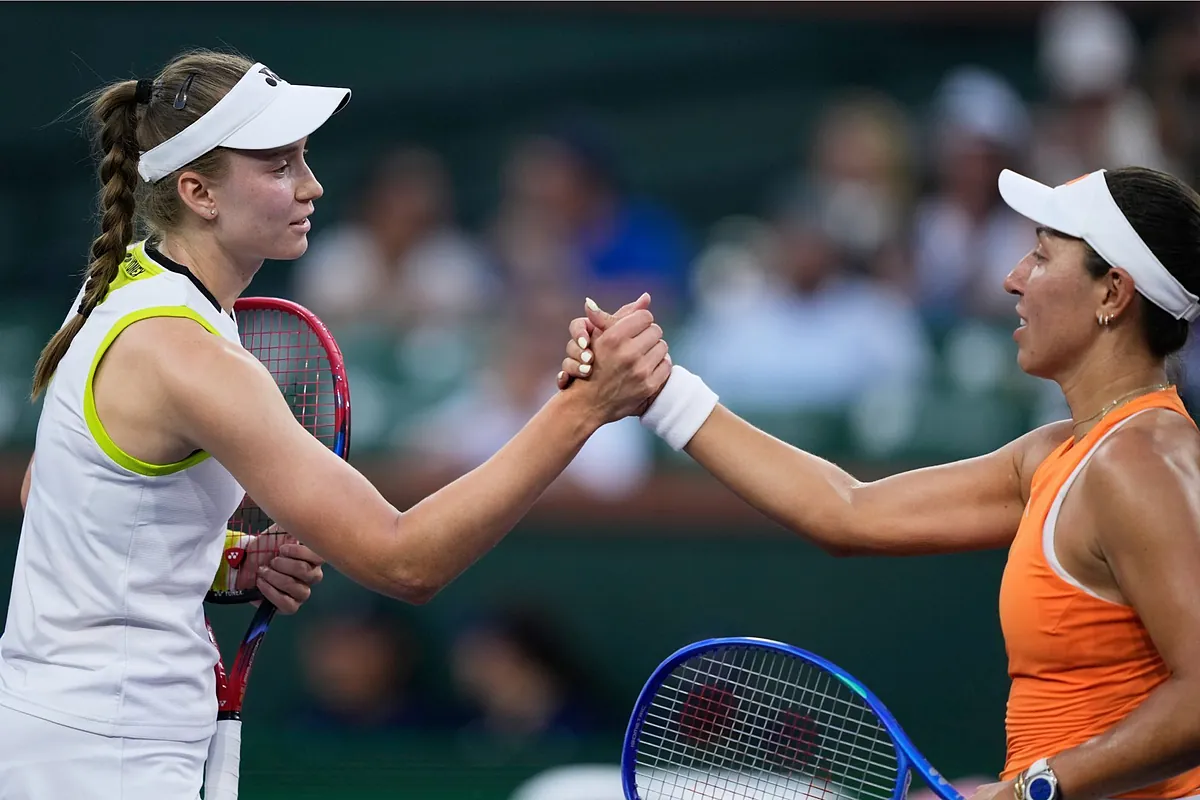
Jessica Pegula came out sharp and composed from the very beginning, quickly setting the tone against Elena Rybakina.
Pegula dictated the pace of rallies and capitalized on her opportunities, turning a strong start into a convincing 6-2 set. While Rybakina relied on her power, including a high number of aces, Pegula’s consistency and ability to extend points proved more effective early on.
Her edge came not just from aggression, but from control. She handled key moments better, converting break chances and keeping unforced errors low, which allowed her to take a clear lead in the match.
How the second set shifted the match completely
In the second set, momentum began to swing as Rybakina raised her level, especially on serve. Her power became more consistent, and she started to win quicker points, reducing Pegula’s ability to control rallies.
Even though the overall numbers between both players remained close, the key difference was timing. Rybakina began to take advantage of critical moments, while Pegula struggled to maintain the same rhythm that had given her control in the first set.
What once looked like a one-sided match suddenly turned into a much tighter battle, forcing a deciding set.
Why the third set slipped away for Pegula
Pegula stayed competitive, extended rallies, and kept putting pressure on return. But she could not fully regain the control she had in the opening set.
Rybakina, on the other hand, managed the key points slightly better. Her serve continued to deliver in important moments, allowing her to hold and avoid giving Pegula clear chances to turn the match back in her favor.
Pegula showed she can compete at this level and even take control of the match early. But sustaining that level against a player like Rybakina remains the challenge.
For Pegula, the Miami Open ends here. But the way this match unfolded says as much about her level as it does about what she still needs to close out matches like this.
Read the full article here