






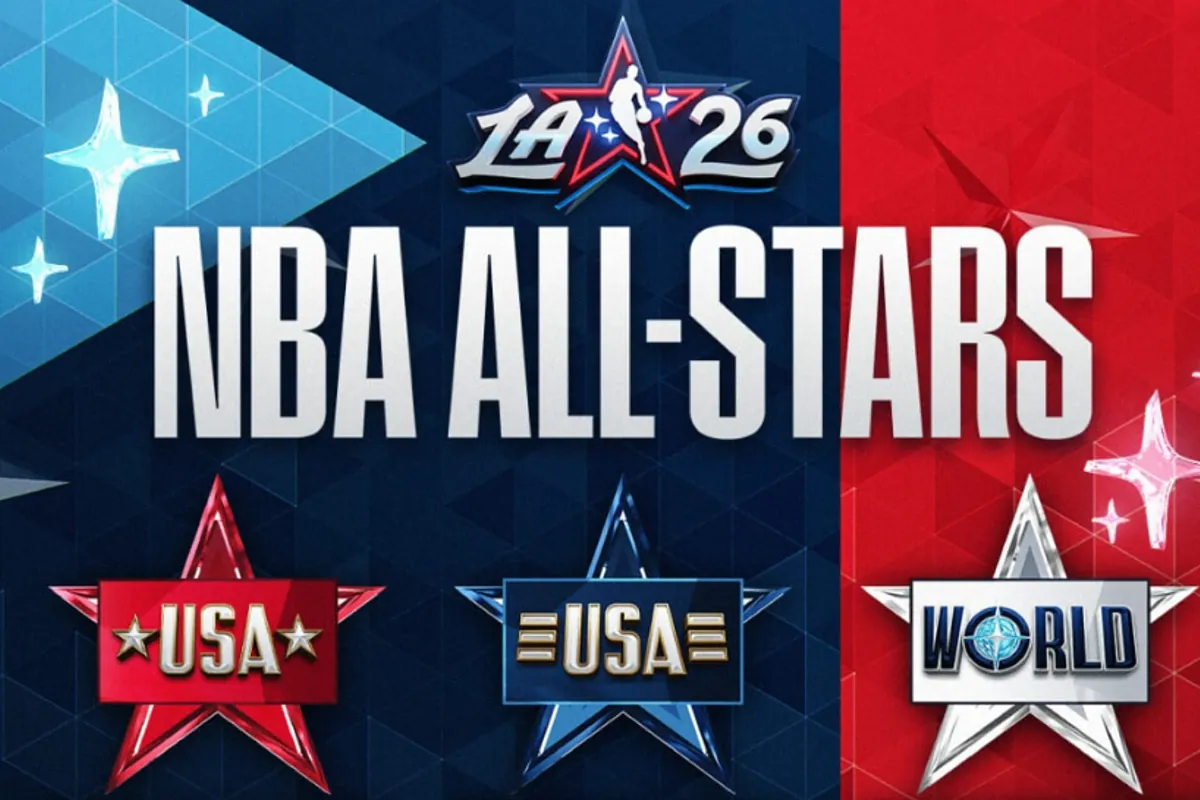
The NBA is overhauling its midseason showcase in an effort to restore competitiveness and global appeal. For the 2026 edition in Los Angeles, the traditional East vs. West matchup disappears, replaced by a fast-paced USA vs. World mini-tournament designed to reward intensity instead of highlight-only basketball.
The event will take place February 13-15, 2026, with the All-Star Game tipping off Sunday at 5:00 p.m. ET on NBC and Peacock at the Intuit Dome. League officials hope the redesigned structure fixes recent criticism that the game felt more like an exhibition than a contest.
As one analyst described, past editions resembled “mixtape basketball,” focused on flashy plays rather than competition. The new structure aims to change that perception.
How the new USA vs World Tournament works
Instead of one full game, the NBA introduces a three-team round-robin competition:
- USA Stars
- USA Stripes
- World Team
Each matchup lasts 12 minutes, equivalent to a single quarter of basketball. Every team plays two games in the opening stage.
Tournament structure
- Game 1: Team A vs Team B
- Game 2: Winner vs Team C
- Game 3: Loser vs Team C
- Championship: Best two records meet in final 12-minute game
If all three teams finish 1-1, point differential decides the finalists.
The four mini-games combine into what effectively equals a full 48-minute contest – but with higher stakes on every possession.
Why the NBA changed the format
The league wants:
- More defense and effort
- Shorter, intense bursts of play
- Global rivalry storytelling
Debate has already started about whether international players defend better than Americans, with stars like Luka Doni, Nikola Joki and Shai Gilgeous-Alexander often cited in comparisons. The format is designed to naturally fuel that conversation on the court.
All-Star Weekend events and selection rules
The All-Star weekend still features fan favorites:
- Celebrity Game
- Rising Stars
- Three-Point Contest
- Shooting Stars
- Slam Dunk Contest
Fans, media and players combine to choose starters (50% fan vote, 25% players, 25% media), while coaches select reserves. Players are now picked position-less, giving flexibility to balance the USA and World rosters. Commissioner Adam Silver can add players if needed to reach the minimum of 16 Americans and eight internationals.
The NBA also sees the format as a chance to elevate global stars. One commentator predicted participation could boost international players’ popularity, noting that emerging talents could leave the weekend with dramatically higher recognition.
A global direction for the league
The NBA has spent decades expanding internationally, and the new All-Star format reflects that shift. Instead of conferences, the focus becomes nationality – a storytelling angle similar to Olympic basketball.
With young global stars rising and fan engagement growing worldwide, the league is betting the USA vs. World rivalry will make the showcase meaningful again.
If the experiment succeeds, the All-Star Game may no longer be remembered for casual scoring records – but for real competition returning to center stage.
Read the full article here