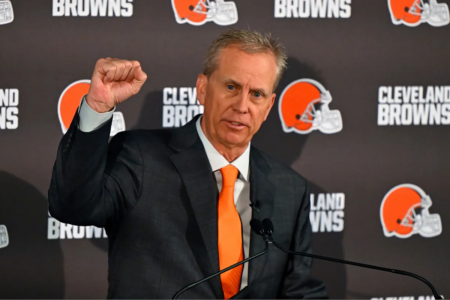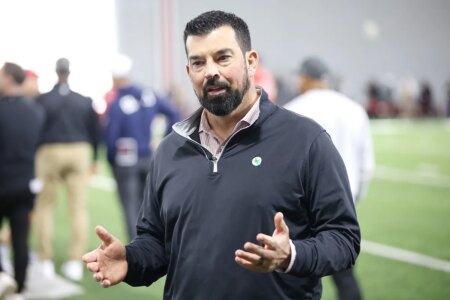




The scene in Columbus was packed with NFL power brokers, all gathered to evaluate the next wave of talent under one roof. Leadership from the Cleveland Browns, including general manager Andrew Berry and head coach Todd Monken, was notably absent from the Ohio State Buckeyes‘ pro day.
Ohio State‘s pro day drew significant attention across the league, featuring more than a dozen draft prospects, including several projected first-round picks. Among them were standout names like linebacker Arvell Reese, safety Caleb Downs, and wide receiver Carnell Tate.
Despite the event’s importance and its proximity to Cleveland, Berry and Monken did not attend.
Why were Berry and Monken absent?
The Browns were not entirely unrepresented. Assistant general managers Catherine Hickman and Glenn Cook were present, according to team insiders. However, the absence of the franchise’s top decision-makers stood out, particularly given the stakes.
Cleveland has already conducted meetings with several Buckeyes prospects. Reese, Downs, and Tate all spoke with team officials during the NFL Scouting Combine, and Tate has visited the Browns‘ facility in Berea.
Still, the decision to skip this setting raised questions, especially when paired with another notable absence. Reports indicated that Browns personnel were also not present at Alabama‘s pro day, where prospects like Kadyn Proctor, Ty Simpson, and Germie Bernard were on display.
Pro days are the chance to evaluate players in their familiar environment, which can reveal intangible qualities that aren’t always visible in structured interviews or combine drills.
For a team like Cleveland, which holds key draft picks and has clear roster needs, these opportunities carry added weight.
The Browns are widely expected to prioritize positions like offensive line and wide receiver, areas where past draft decisions under Berry have produced mixed results. That context makes the absence from two major pro days more significant.
Across the league, attendance at pro days often signals interest. The presence of multiple general managers and head coaches in Columbus reinforced the importance of the event.
While there’s no rule requiring top executives to attend, their absence can be interpreted in different ways. Some view it as a calculated decision, perhaps indicating Cleveland has already formed strong opinions on these prospects.
Others see it as a missed opportunity, particularly for a team undergoing transition and working to strengthen a thin roster.
There’s also the broader perception factor. In a competitive draft landscape, thoroughness and visibility matter, not just internally, but across the league.
With the 2026 NFL Draft approaching, the Browns will continue finalizing their evaluations through private workouts, film study, and in-house meetings.
Whether their absence signals confidence or oversight will only become clear once selections are made.
For now, the focus shifts to how Cleveland uses its draft capital, and whether those decisions reflect a process that left no stone unturned.
Read the full article here