





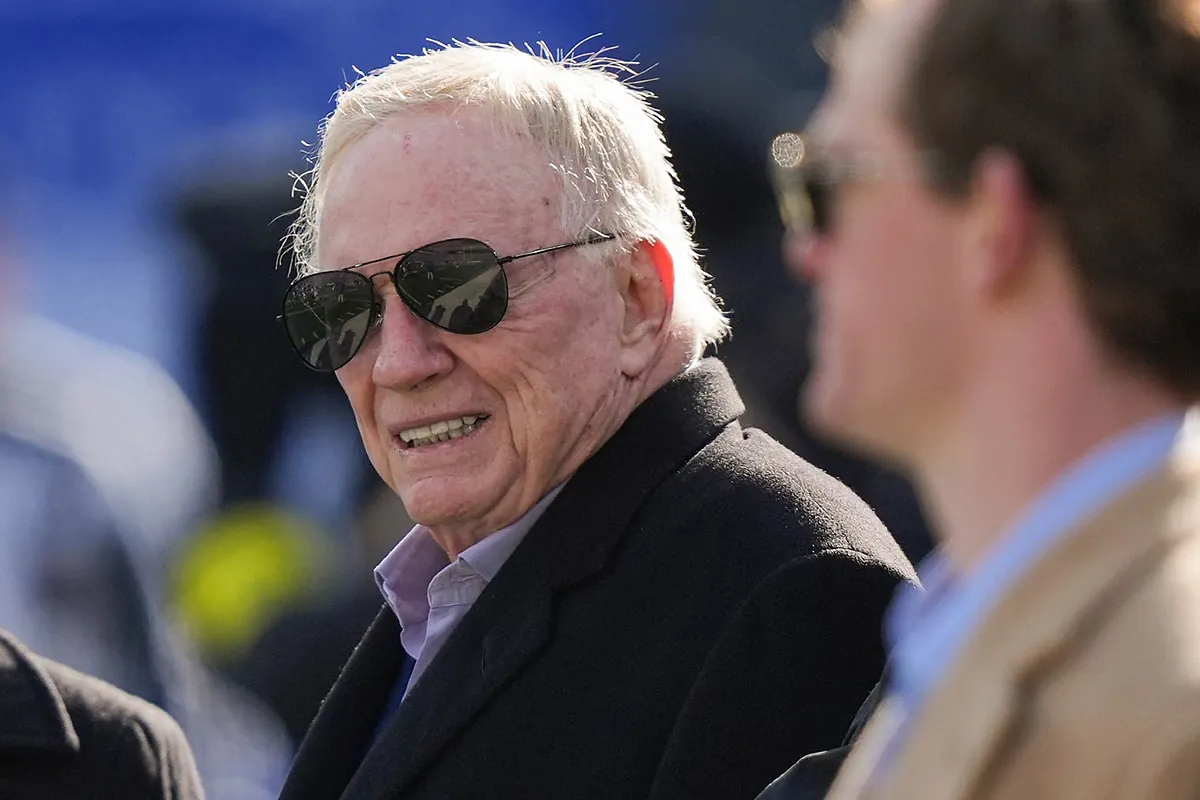
January 28, 1996 marked the last true day of glory for the Dallas Cowboys. That night, after defeating the Pittsburgh Steelers, the franchise lifted its fifth Vince Lombardi Trophy and closed one of the most dominant dynasties in NFL history. Thirty years later, that moment remains the highest point for a team that, despite its financial power and global relevance, has failed to return to the summit of professional football.
What once looked like the beginning of a prolonged era of dominance instead turned into a drought that is now difficult to justify. Valued at $13 billion in 2025 and widely regarded as the most valuable sports franchise in the world, the Cowboys have become a unique case: sustained business success paired with persistent on-field failure.
The breaking point of a dynasty
The roots of the decline can be traced back to the late 1990s. The dynasty built around Troy Aikman, Emmitt Smith, and Michael Irvin had a key architect in head coach Jimmy Johnson. However, success brought with it an inevitable clash of egos. The power struggle between Johnson and owner Jerry Jones over control and credit for the team’s victories ended with the departure of the coach who had laid the foundation for dominance.
Related:
- Super Bowl 2026: Date, time, location, and everything to know
- Where to watch the Super Bowl 2026? TV channel and streaming
- Super Bowl Halftime Show 2026: Everything about Bad Bunny’s performance
- How much do tickets for the Super Bowl cost in 2026?
- Super Bowl Winners List: All teams that have won the Vince Lombardi
Barry Switzer managed to win one more Super Bowl by riding the momentum of that roster, but the fracture was already irreversible. From that point on, Jones solidified a model of absolute control that has shaped the franchise’s direction for the past three decades.
Jerry Jones and the cycle of stagnation
Since then, Jerry Jones has operated simultaneously as owner and general manager, a dual role that has limited the team’s sporting evolution. The pattern has been consistent: hiring coaches with little real autonomy or established figures who eventually leave due to the lack of decision-making power.
The results speak for themselves. In the post-Switzer era, Dallas has posted a disappointing 4-12 record in playoff games, an unacceptable figure for a franchise that enters almost every season with championship expectations.
The 2025 season deepened that sense of drift. The dismissal of Mike McCarthy in January, influenced in part by contractual considerations, led to the promotion of Brian Schottenheimer, a coach with no prior experience as a head coach. That decision was compounded by the controversial departure of Micah Parsons, who was traded after failing to secure a contract extension. The result was a severely weakened defense that surrendered 511 points, the worst total in the league.
Global brand, local results
While other successful organizations have clearly separated the business side from football operations, the Cowboys have prioritized the expansion of the “America’s Team” brand. They lead the league in global visibility, search interest, and social media engagement, but that dominance has not translated into championships or deep playoff runs.
At 83 years old, Jerry Jones continues to insist that his main objective is to win another Super Bowl. Yet the absence of a modern football structure and his reluctance to relinquish control remain the primary obstacles. With a 7-9-1 record in 2025, Dallas appears closer to fighting for relevance than legitimately contending for a title, leaving its fan base to wonder whether the 30-year wait is far from over.
Read the full article here