




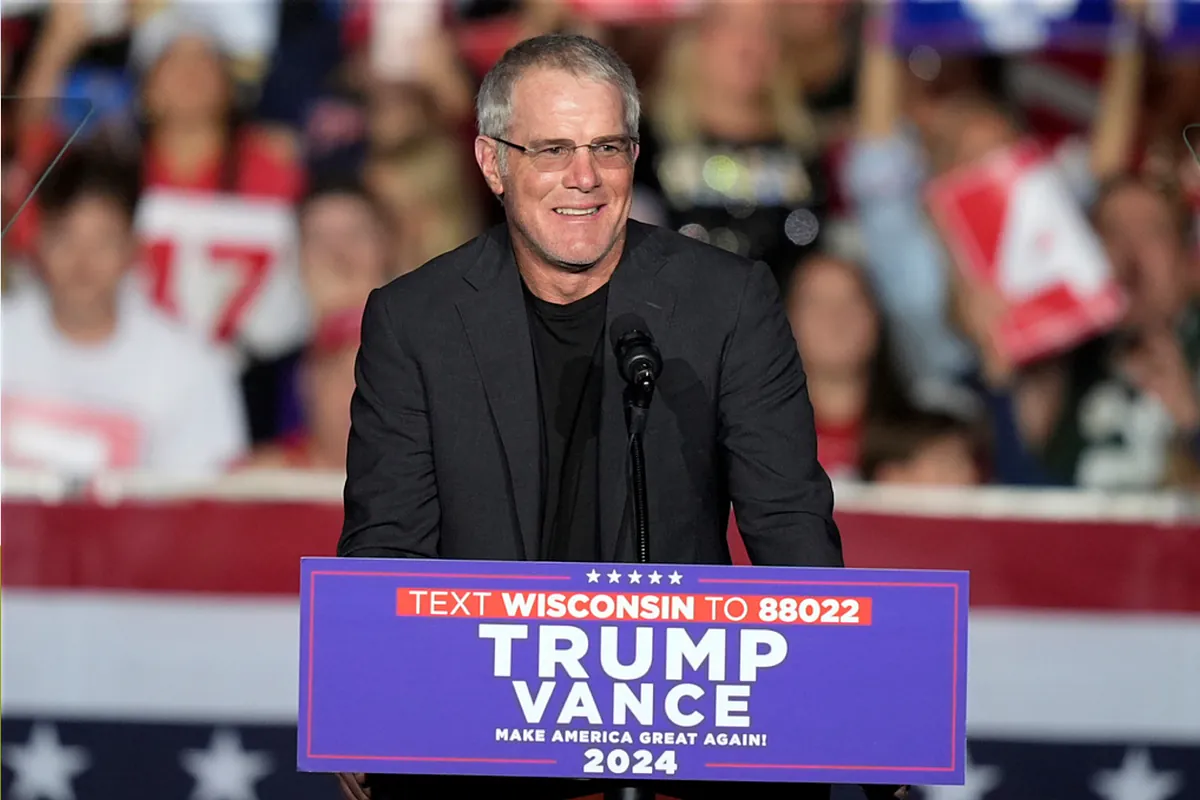
Hall of Fame quarterback Brett Favre has ignited fresh discussion about the state of professional football after questioning whether today’s NFL still connects with its traditional audience. During an appearance on Tomi Lahren Is Fearless, the former Green Bay Packers star argued that the league’s cultural direction has changed over the last decade – and not always in ways longtime fans appreciate.
The NFL remains the most popular sports league in the United States, yet its evolution into a broader entertainment product has created divisions among viewers. From halftime shows and messaging campaigns to social commentary surrounding major events like the Super Bowl, the league increasingly blends sports with mainstream culture. Favre suggested that shift may be altering the experience for core supporters.
“There’s probably some truth to that,” Favre said when asked whether casual and longtime fans feel less connected today.
He added that football used to function as a shared national experience regardless of geography or team allegiance. According to Favre, the biggest games once brought people together simply for the sport and its traditions.
You watch the halftime show, you watch the anthem – that’s been that way for a long time. But in the last maybe 10 years… there’s been a slight shift.
Why Favre believes the NFL is changing
Favre’s central point wasn’t tied to one specific event but rather to a broader trend: the league expanding beyond pure competition into a wider entertainment platform. He questioned whether this strategy risks overlooking its most loyal audience.
You want to appeal to your true fans. And it doesn’t seem like that is the case anymore.
The modern NFL targets multiple demographics simultaneously – sports fans, casual viewers, music audiences and social media communities. That approach has undeniably worked from a business standpoint. Television ratings remain enormous and the Super Bowl continues to dominate global viewership.

However, critics argue the league sometimes prioritizes spectacle over tradition. Supporters counter that adapting to modern audiences keeps football culturally relevant. The debate illustrates a larger tension across professional sports: maintaining heritage while attracting new generations.
Fans divided over NFL football’s future
Favre’s comments resonated widely online because they reflect a conversation happening among fans for years. Some agree that the league’s expanded entertainment focus changes the tone of the game. Others believe evolution is necessary for long-term growth.
Despite differing opinions, one fact remains clear – interest in the NFL has not declined. The sport still commands record audiences, massive sponsorship deals and international expansion plans. That success complicates criticism because business performance suggests the strategy is effective.
Still, Favre’s remarks highlight an emotional component beyond ratings: identity. For many supporters, football represents tradition, routine and shared culture. When presentation changes, reactions become passionate.
Whether the NFL eventually shifts back toward a more traditional feel or continues embracing broader entertainment elements, the conversation sparked by Favre shows how deeply fans care about the league’s direction – and why its future will always be debated far beyond the field.
Read the full article here