




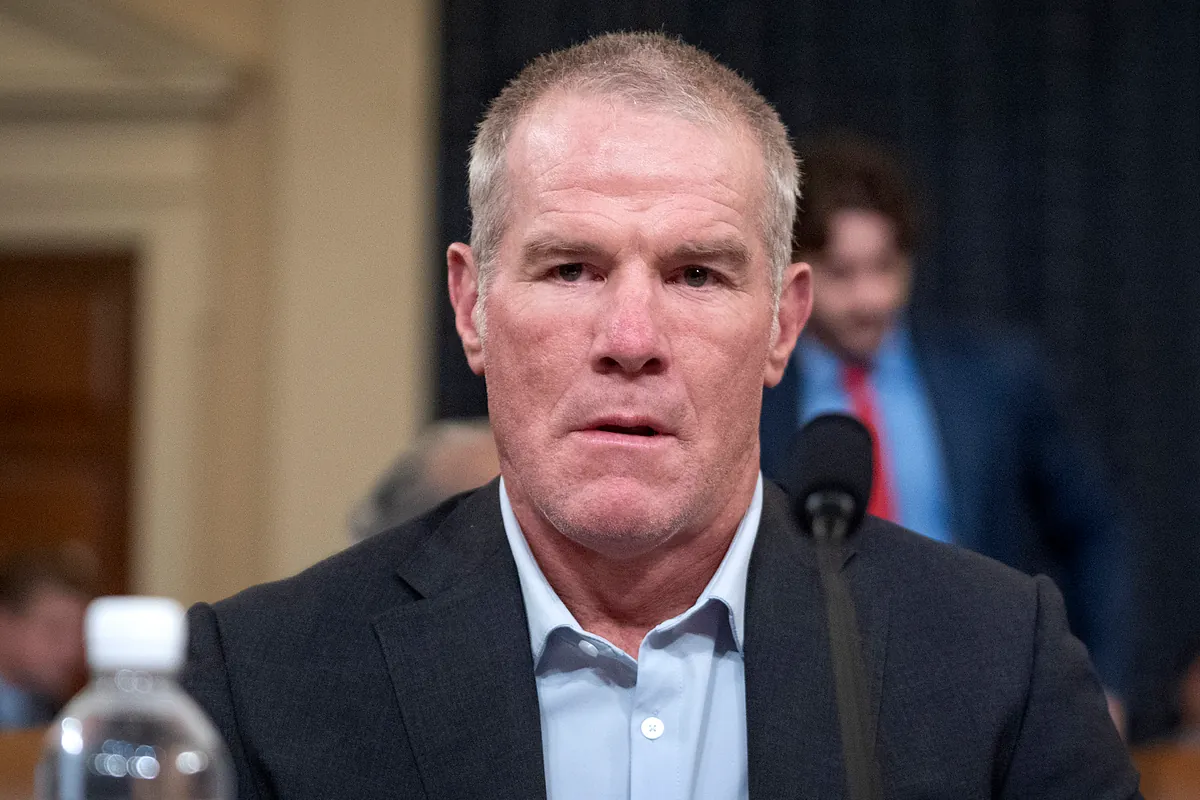
Former NFL quarterback Brett Favre didn’t hold back his opinion on the league’s controversial choice for the Super Bowl LX halftime show.
The Hall of Famer, widely regarded as one of football’s greatest quarterbacks, openly criticized the NFL for featuring Bad Bunny as the headlining performer.
Favre‘s comments, made during a recent Tomi Lahren podcast appearance, have added to the discussion about the cultural direction of the Super Bowl and whether the league is still prioritizing its traditional audience.
Favre suggested that the NFL‘s entertainment strategy has shifted over the past decade, moving away from what he called “true fans”, long-time football viewers who enjoy both the sport and its associated traditions, such as the national anthem and halftime performance.
“I think your general football audience is people like you and I,” he said. “Maybe loves football, or maybe is a casual, fair-weather fan, but it is the biggest show in town. So you watch it, you know, you watch the halftime show and who sang the national anthem. You know, that’s been that way for a long time.”
Favre expressed confusion over the league’s priorities. According to him, appealing to the broader, global audience seems to have taken precedence over catering to long-standing domestic fans.
“For whatever reason, I have no idea, because you want to appeal to your true fans. And it doesn’t seem like that is the case anymore,” he added.
These remarks add to the sentiment shared by some fans who feel alienated by performances that prioritize international appeal over what they see as traditional American pop culture.
The debate over halftime entertainment
Despite the criticism, Bad Bunny‘s halftime show achieved massive viewership, drawing more than 128 million viewers on NBC alone.
The Puerto Rican superstar’s energetic performance combined music and striking choreography, earning praise from many Latino fans and critics for its inclusivity and creativity.
At the same time, some commentators and political figures criticized the choice, arguing it was too foreign or disconnected from what they consider American traditions.
NFL Commissioner Roger Goodell defended the performance, emphasizing the league’s desire to reach diverse audiences and highlight performers with global influence.
While the show was polarizing, it undeniably became a huge talking point, demonstrating how halftime entertainment has evolved into more than just background music for a football game.
While some argue that international representation enriches the spectacle, others, like Favre, worry it risks alienating longtime viewers who feel the league is moving away from the essence of traditional football entertainment.
The debate over halftime shows may continue, but it shows just how much the Super Bowl has grown into a cultural phenomenon that extends far beyond the field.
Read the full article here