



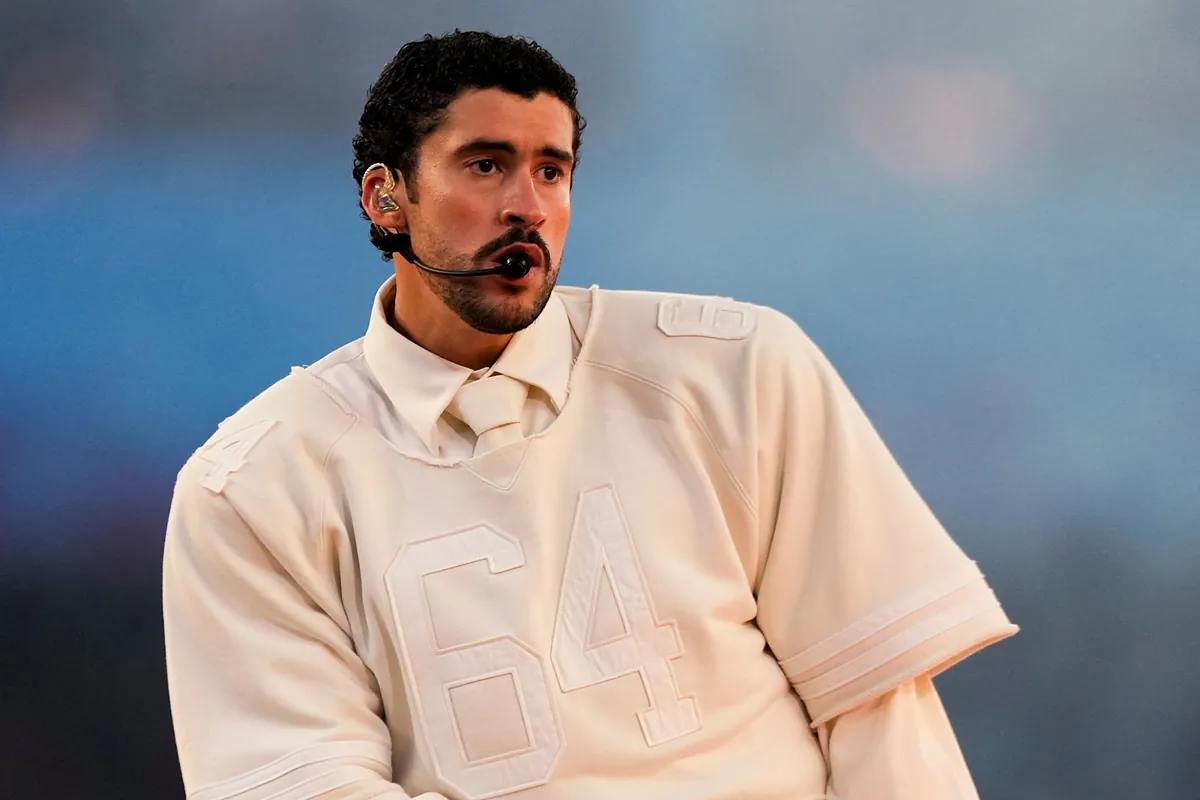
Since the Grammys, rumors around Bad Bunny’s security have steadily grown, fueled by the political and cultural tension currently shaping the country. Debate over his Super Bowl halftime performance had already placed Benito at the center of online conversation, with speculation suggesting that his heightened security presence was a response to the climate surrounding what he represents. That narrative only intensified after fans noticed he attended the Grammys alone, a move many interpreted as an effort to minimize risk rather than make a statement.
The conversation followed him all the way to Levi’s Stadium. As Bad Bunny entered the field ahead of the halftime show, the amount of security escorting him was impossible to ignore. The visible protection immediately stood out, reinforcing theories that his Super Bowl appearance required extra caution due to the controversy and expectations surrounding one of the most discussed halftime shows in recent years.
Why the security became part of the story
Speculation went further as viewers revisited earlier moments, including his tense reaction at the Grammys, which some fans retroactively linked to heightened nerves. Others focused on his physical appearance, noting how bulky he looked during recent public appearances. Online theories ranged from claims of protective gear to symbolic wardrobe choices, though none of these ideas have been confirmed. What was clear, however, was that the level of protection surrounding him during Super Bowl week made the discussion hard to avoid.
When Bad Bunny finally took the stage, the performance reframed the conversation. Rather than leaning into confrontation, the halftime show centered on cultural symbolism, identity, and community. The visuals and musical choices spoke directly to Latino roots, not just in the United States, but across the Americas. While some interpreted elements of the show as politically charged, the message leaned more toward unity than division.
A performance shaped by symbolism, not slogans
The careful attention paid to Bad Bunny throughout the night reflected how closely his presence was being monitored. Even without direct references to government figures or policies, the symbolism resonated strongly with audiences who felt represented on one of the largest stages in sports. That resonance, according to many fans, is precisely why the security stood out – not because of what he said, but because of what the performance stood for.
Bad Bunny’s heavy security presence became part of the halftime show’s broader narrative. It highlighted the weight of the moment, the scrutiny surrounding the artist, and the cultural impact of his performance. While debates and theories continue online, the lasting takeaway was a show that prioritized peace, unity, and community – and one that left many feeling seen, applauded, and represented long after the lights went down.
Read the full article here