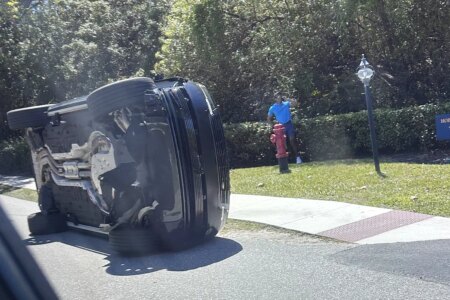







Golf icon Tiger Woods is confronting both legal repercussions and personal challenges following his March 27 rollover crash near his Jupiter Island, Florida, home that led to his arrest for driving under the influence. The 50-year-old athlete, widely regarded as one of the greatest golfers in history, has publicly acknowledged the gravity of the situation and committed to stepping away from public life and competition to focus on treatment and recovery.
Woods‘ SUV overturned when he attempted to pass another vehicle on a narrow residential road, colliding with the back of a truck trailer. Neither Woods nor the other driver, Jeromy Bullard, sustained serious injuries.
Deputies at the scene reported that Woods showed visible signs of impairment during field sobriety testing, even though a breathalyzer reading was zero.
Officers also found two prescription hydrocodone pills on Woods‘ person. Additional indicators of impairment included bloodshot eyes and continuous hiccups throughout the investigation. He was charged with DUI involving property damage and refusal to submit to a lawful test after declining a requested urine analysis.
This is not Woods‘ first brush with DUI-related legal trouble. In 2017, he was arrested for DUI after a single-vehicle accident in Florida, a past incident that legal experts say will likely be considered an aggravating factor in the current case.
While jail time is technically possible, analysts suggest that a judge is more likely to prioritize treatment over incarceration, particularly since no one was seriously injured in the recent crash and Woods has expressed a commitment to recovery.
Treatment commitment could impact sentencing
Legal commentators note that Woods‘ decision to seek treatment could play a crucial role in shaping his sentence. Gregory Doll, a legal expert, indicated that while incarceration is “theoretically possible,” it is unlikely.
“My understanding is that he was impaired from medication, not from other recreational drugs or alcohol,” Doll said.
“While that is not a good thing, I don’t see any judge wanting to send him to jail, particularly because no one else was hurt in the accident and he’s already seeking treatment.”
Potential consequences are expected to include community service, a suspended or revoked driver’s license, and possibly a suspended jail sentence contingent on Woods’ participation in a treatment program.
Judges often use such measures to encourage rehabilitation and ensure that defendants comply with medical or behavioral programs following repeat offenses.
In a statement posted on X, Woods addressed the situation directly, saying, “I know and understand the seriousness of the situation I find myself in today. I am stepping away for a period of time to seek treatment and focus on my health. This is necessary in order for me to prioritize my well-being and work toward lasting recovery.”
While Woods‘ legacy in golf remains monumental, this latest incident serves as a reminder that the consequences of impaired driving are serious.
Read the full article here